
Exacum zeylanicum var. macranthum
Exacum zeylanicam var. macranthum (Arn.) C. B. Clarke.
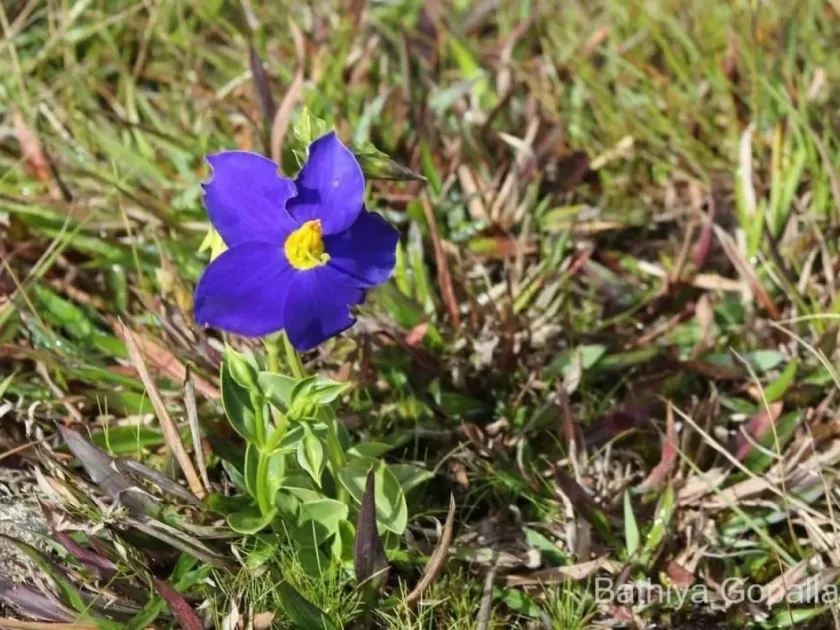
Description
Sowing dates
Propagation is primarily carried out via seeds, as this species produces tiny seeds with high germination potential. Seeds should be sown on the surface of a light, moist substrate.
The ideal time for sowing is late winter or early spring, ensuring the seedlings have enough time to establish before the peak summer season.
Successful germination requires a constant temperature between 20–22 degrees Celsius. Using a miniature greenhouse or plastic cover helps maintain necessary humidity.
Pricking out the young seedlings is recommended once they develop two pairs of true leaves. The root system is quite fragile, so careful handling is essential during this stage.
Acclimatization of young plants to ambient conditions should be gradual, typically over a period of two weeks, to prevent transplant shock.
Growing requirements
Exacum zeylanicum var. macranthum belongs to the Gentianaceae family and is native to the tropical regions of Sri Lanka. It thrives in bright, indirect light conditions.
The soil should be loose, well-drained, and nutrient-rich, with a slightly acidic to neutral pH level. A mix of peat and perlite works effectively for this plant.
Maintaining high humidity is crucial for this species. Dry air can cause stunted growth and early flower drop, so regular misting is highly recommended.
Watering should be consistent; the soil must remain moist but never waterlogged. Overwatering often leads to root damage and eventual plant death.
The preferred temperature range for this plant is between 18 and 24 degrees Celsius, avoiding any extreme temperature drops or drafts.
Main diseases and pests
Common pests include aphids and spider mites, which often proliferate in environments with low humidity. They can severely weaken the plant by feeding on its sap.
Mealybugs are another potential threat, often hiding in leaf axils. Regular inspection is necessary to manage these pests before they spread extensively.
Root rot is a major risk associated with excessive moisture and poor drainage. Ensuring that pots have drainage holes is a fundamental requirement for plant health.
Gray mold may develop in poorly ventilated spaces with high humidity. Prompt removal of infected leaves and improved air circulation help control the issue.
Integrated pest management, including natural predators and selective fungicides, is the preferred approach for maintaining long-term plant health.