
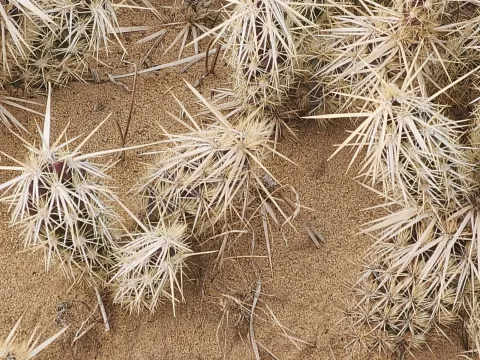
Grusonia
Grusonia
Propagation of Grusonia is most commonly achieved through segment cuttings, which readily develop roots when placed in a suitable growing medium.
What the section contains


Grusonia
The ideal window for propagation is late spring or early summer, coinciding with the active growing season of the cactus species.
It is critical to let the cut surface callus over for several days in a shaded, dry area before inserting the cutting into the soil mix.
The rooting substrate should consist primarily of coarse sand, perlite, and a small amount of peat to ensure minimal moisture retention during the initial stages.
Once planted, keeping the cuttings in a bright, warm location without direct scorching sun will help stimulate successful root development.
Grusonia is a genus within the Cactaceae family, known for its segmented stems and specialized adaptations to desert environments.
These plants thrive in regions with high solar radiation and require full sun exposure to maintain compact growth and healthy thorn development.
The soil must be exceptionally well-draining, mimicking the mineral-rich, rocky desert soils where these plants naturally occur.
During the growing season, moderate watering is required, but the soil must be allowed to dry out completely between watering sessions.
A distinct winter dormancy period is essential, requiring cooler temperatures and minimal to zero water to prevent etiolation and promote blooming.
The primary threats to Grusonia are fungal pathogens, specifically those causing root rot, which are triggered by poor drainage or excessive humidity.
Once rot takes hold of the segmented stem, it spreads rapidly, often necessitating the surgical removal of infected parts and complete substrate replacement.
Mealybugs are the most persistent insect pests, often hiding in the crevices between stems where they are difficult to reach with topical treatments.
Spider mites can also become an issue during hot, dry spells, causing discoloration of the epidermis and weakening the overall plant vigor.
Regular inspection and the use of appropriate systemic insecticides or horticultural oils are recommended to maintain plant health throughout the season.