
Gymnocalycium alboareolatum
Gymnocalycium alboareolatum
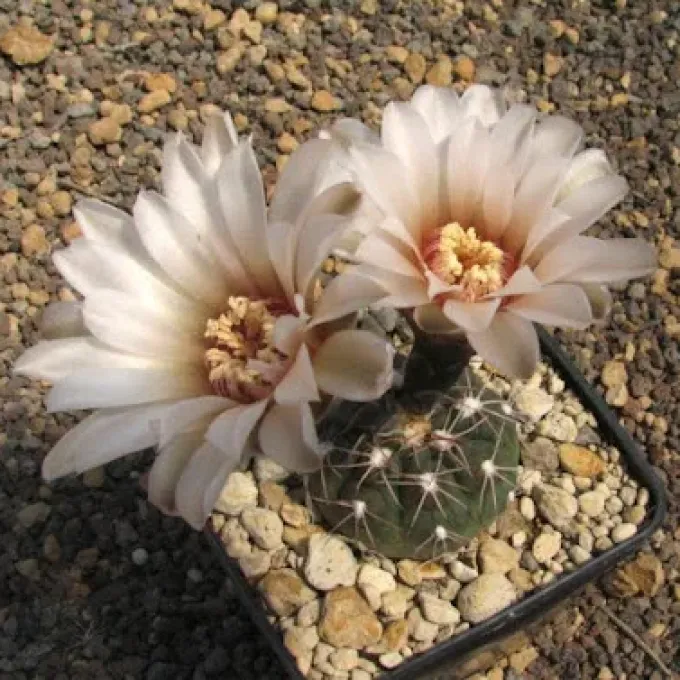
Description
Sowing dates
Sowing Gymnocalycium alboareolatum seeds is best performed during the early spring months. This timing ensures that as the seedlings emerge, they can benefit from the increasing intensity of natural daylight, which is crucial for healthy early development.
The planting substrate should be fine, porous, and well-sterilized to prevent damping-off diseases, which are common among young cacti. A mix of fine sand and peat is generally recommended, providing a stable medium for seed germination.
Keep the sowing container covered with glass or plastic to maintain high humidity and a consistent temperature between 22 and 25 degrees Celsius. It is essential to lift the cover daily to exchange air, preventing the buildup of stagnant conditions.
Once the seedlings have reached a reasonable size and developed their first spines, they can be gradually acclimated to ambient conditions. This hardening-off process should be gentle to avoid shocking the delicate root systems.
Pricking out or transplanting the seedlings into individual small pots should be done with extreme care. Using a pair of tweezers or a small spatula helps in transferring the tiny cacti without damaging the fragile root tissues.
Growing requirements
Gymnocalycium alboareolatum is a member of the Cactaceae family native to the arid regions of Argentina. It is highly valued in collections for its distinct white woolly areoles and spherical stem structure.
The plant requires bright, filtered light to maintain its compact growth habit. While it needs ample light for photosynthesis, direct midday exposure, particularly in summer, can cause surface burns, so providing light shade during the hottest hours is advisable.
The ideal potting mix must be free-draining and slightly acidic. A blend containing loam, leaf mold, coarse sand, and a small amount of charcoal works well to ensure adequate aeration and prevents moisture from lingering around the base of the plant.
Watering should be practiced with caution, allowing the substrate to dry out completely between sessions. During the winter dormancy phase, the plant should be kept dry and cool, ideally between 10 and 12 degrees Celsius, to mimic its natural environment.
Fertilizing with specialized cactus formulas, low in nitrogen, is recommended during the growing season. This ensures the plant receives the necessary nutrients without encouraging weak, rapid growth that may lead to structural instability or disease susceptibility.
Main diseases and pests
The most common threat to Gymnocalycium alboareolatum is root rot, typically caused by overwatering or poor drainage. Infected plants often show a loss of firmness and a darkening of the stem base, necessitating immediate removal and inspection.
Spider mites are a persistent pest, especially in dry and warm environments. They feed on the sap of the cactus, causing visible discoloration and small scar patches on the epidermis, which can permanently impair the plant's aesthetic appeal.
Mealybugs are another serious concern, often attacking the roots or hiding in the crevices between the ribs. These pests can severely weaken the cactus by sucking out essential nutrients and leaving behind sticky secretions that invite fungal growth.
Effective pest management requires the use of systemic insecticides or miticides. In cases of root infestation, it is often necessary to wash the root system thoroughly and repot the plant in fresh, pathogen-free soil to ensure recovery.
Prevention remains the best strategy, involving proper air circulation and strictly avoiding water accumulation on the plant's body. Regularly monitoring the health of the cactus and maintaining a clean environment significantly reduces the risk of infestation.