
Galapagos prickly pear
Opuntia galapageia
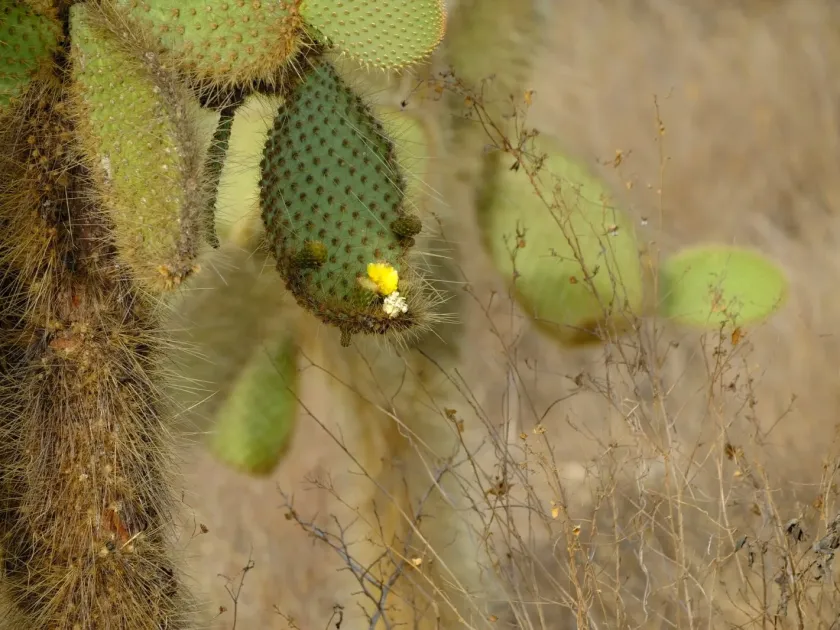
Description
Growing requirements
The Galapagos prickly pear (Opuntia galapageia) is a member of the Cactaceae family. This species is endemic to the Galapagos Islands, evolved in volcanic environments with distinct isolation periods.
The plant requires well-drained, sandy, or rocky soils with minimal organic content. It is adapted to saline environments, making it resilient in coastal areas with high mineral concentrations.
As a true xerophyte, it thrives in direct sunlight and requires high light intensity for optimal growth. Insufficient sunlight causes etiolation and weakens the structural integrity of the stems.
Temperature management is critical; the plant performs best between 22 and 30 degrees Celsius. It lacks cold hardiness and must be grown in controlled environments if the outside climate experiences freezing temperatures.
Water requirements are minimal. The soil must be allowed to dry completely between watering sessions to prevent the buildup of moisture at the base, which is the primary cause of root failure.
Yield
While protected in its natural habitat, the Galapagos prickly pear holds significant potential as a biological resource for drought-resistant plant breeding programs globally.
Its fruits are edible and nutritionally dense, containing vitamins and minerals essential for survival in arid environments, serving both humans and endemic wildlife.
The biomass of the pads, if processed correctly, can serve as a supplementary forage for livestock, providing necessary hydration and energy in arid grazing lands.
In landscaping, this species offers a sustainable option for xeriscaping, requiring little to no irrigation once established and providing aesthetic value with its unique growth habit.
The plant's ability to regenerate from pad segments makes it a sustainable crop that can be harvested periodically without destroying the entire mother plant structure.
Main diseases and pests
Fungal infections represent the most significant threat, particularly those facilitated by waterlogged substrates or high humidity levels that compromise the plant's cuticle.
Pests such as mealybugs and spider mites are common in greenhouse environments, feeding on the succulent tissue and creating entry points for opportunistic bacterial infections.
Cactus moth larvae pose a severe threat, capable of devouring large sections of the stems and causing irreparable structural damage to the plant's anatomy.
Excessive fertilizer application can lead to rapid, succulent growth that is overly susceptible to pests and diseases, necessitating a balanced nutrient regimen.
Effective management includes regular sanitation of the growing area and the application of systemic fungicides to prevent the spread of soil-borne pathogens.