
Grusonia bulbispina
Grusonia bulbispina
Description
Growing requirements
Grusonia bulbispina belongs to the Cactaceae family. This perennial succulent is native to the arid regions of northern Mexico, specifically within the states of Coahuila and Durango, where it thrives in harsh desert conditions.
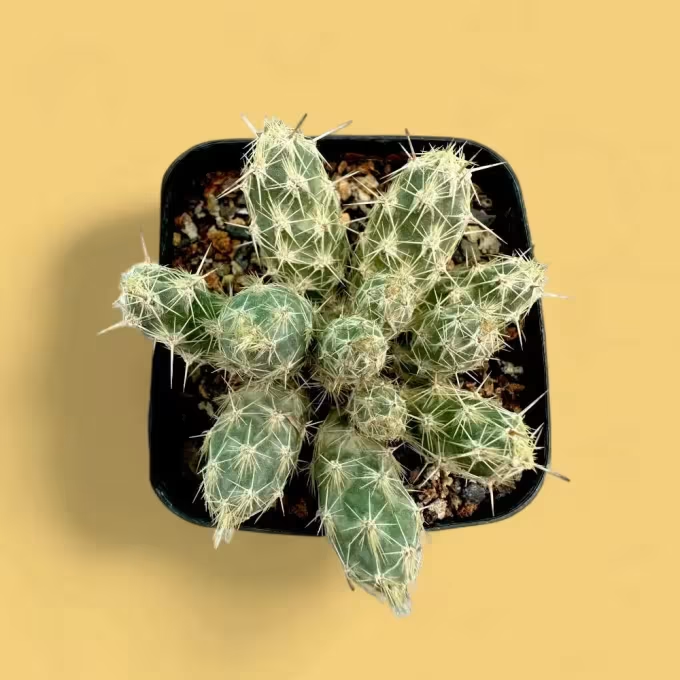
The plant is characterized by a low-growing, shrubby habit with segmented stems. Its most distinct botanical feature is the presence of large, bulbous-based spines, which provide the plant with a unique appearance and distinguish it from similar opuntioid cacti.
Cultivation requires abundant direct sunlight to maintain the plant's health and typical growth structure. Inadequate light levels will lead to etiolation, where the stems become pale, thin, and unnaturally elongated, losing their structural integrity.
The ideal growing medium must be highly porous and mineral-rich. A mixture of coarse sand, gravel, and pumice is recommended to ensure rapid drainage, as this species is extremely intolerant of waterlogged soil conditions around its roots.
Temperature management should mirror the natural desert cycle, involving warm, dry growing seasons and a cool, dormant winter period. During the dormancy phase, the plant requires very little to no irrigation to prevent physiological stress.
Main diseases and pests
The primary threat to Grusonia bulbispina is root and stem rot caused by excessive humidity or poor soil drainage. Once rot sets in, it spreads rapidly through the segments, often necessitating the surgical removal of infected tissues.
Mealybugs are common pests that tend to cluster between the stem joints and at the base of the spines. These insects extract sap from the cactus, which can stunt its growth and make the plant susceptible to secondary fungal infections.
Spider mites represent another common pest, particularly in environments with low airflow and high temperatures. These microscopic pests cause localized damage to the epidermis, resulting in discolored, scarred patches on the plant's surface.
Effective pest management involves the use of systemic insecticides specifically labeled for succulent plants. Regular visual inspections are vital to catch infestations before they become systemic and impact the overall health of the plant.
Sanitation practices, such as removing dead organic matter from the potting mix and ensuring good ventilation, are critical preventative measures. Keeping the plant in an environment that mimics its natural, arid habitat is the best strategy against disease.