
Tillandsia
Tillandsia L.
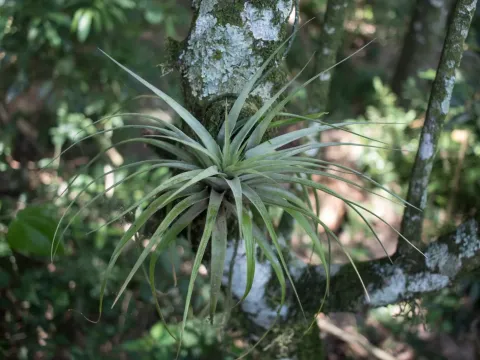
Tillandsia L. is a diverse genus of evergreen, perennial flowering plants belonging to the Bromeliaceae family. Native to the tropical and subtropical regions of the Americas, these plants are predominantly epiphytic, meaning they naturally anchor themselves to trees or rocks rather than growing in the soil.
What the section contains
 Blue tillandsia
Tillandsia cyanea Linden ex K. Koch
Blue Tillandsia Hybrid
Tillandsia cyanea x Tillandsia laxissima
Blue tillandsia
Tillandsia cyanea Linden ex K. Koch
Blue Tillandsia Hybrid
Tillandsia cyanea x Tillandsia laxissima
 Spanish moss
Tillandsia usneoides (L.) L.
Spanish moss
Tillandsia usneoides (L.) L.
 Spreading airplant
Tillandsia utriculata L.
Spreading airplant
Tillandsia utriculata L.
 Tillandsia capitata
 Griseb.
Tillandsia capitata
Tillandsia capitata Griseb.
 Tillandsia cyanea
 x Tillandsia pretiosa
Tillandsia cyanea
Tillandsia cyanea x Tillandsia pretiosa
 Tillandsia hybrid
Tillandsia utriculata L. x T. stricta Sol. Ex Ker Gawl.
Tillandsia laxissima
Tillandsia laxissima Mez
Tillandsia hybrid
Tillandsia utriculata L. x T. stricta Sol. Ex Ker Gawl.
Tillandsia laxissima
Tillandsia laxissima Mez
 Tillandsia leiboldiana
 Schltdl.
Tillandsia leiboldiana
Tillandsia leiboldiana Schltdl.
 Tillandsia pretiosa
 Mez
Tillandsia pretiosa
Tillandsia pretiosa Mez
 Tillandsia stricta
 Sol. ex Ker Gawl.
Tillandsia stricta
Tillandsia stricta Sol. ex Ker Gawl.
Tillandsia
The botanical classification of Tillandsia separates them into two primary groups: atmospheric and xeric. Atmospheric species are highly specialized, possessing reduced root systems used solely for mechanical support. They derive their moisture and essential nutrients from the air through specialized leaf structures known as trichomes.
Optimal cultivation requires bright, indirect light, as intense direct sun can quickly scorch their sensitive foliage. A stable temperature range between +18 and +26 degrees Celsius is preferred. Proper air circulation is crucial to mimic their natural habitat and prevent the accumulation of stagnant moisture between leaves.
Watering requirements are specific: rather than traditional watering, these plants thrive when misted frequently or submerged in water for a brief period weekly. It is essential to shake off excess moisture after immersion to allow the plant to dry within four hours, which mimics the natural drying cycle.
In commercial agriculture, Tillandsias are cultivated as ornamental plants for the interior design market. Their popularity stems from their low-maintenance lifestyle, unique structural beauty, and the dramatic, colorful inflorescences produced by many species during their reproductive phase.
Common pests affecting indoor Tillandsia collections include mealybugs and scale insects. These pests often hide in the base of the leaves, where they are protected. Early detection through regular inspections is key, followed by manual removal or the application of insecticidal soaps specifically formulated for indoor use.
The most significant threat to plant health is crown rot, caused by excessive moisture remaining in the center of the rosette. Fungal infections thrive in stagnant, wet environments. To mitigate this, ensure adequate airflow and avoid overhead watering in low-light, cool conditions where evaporation is significantly delayed.