
Tillandsia pretiosa
Tillandsia pretiosa Mez
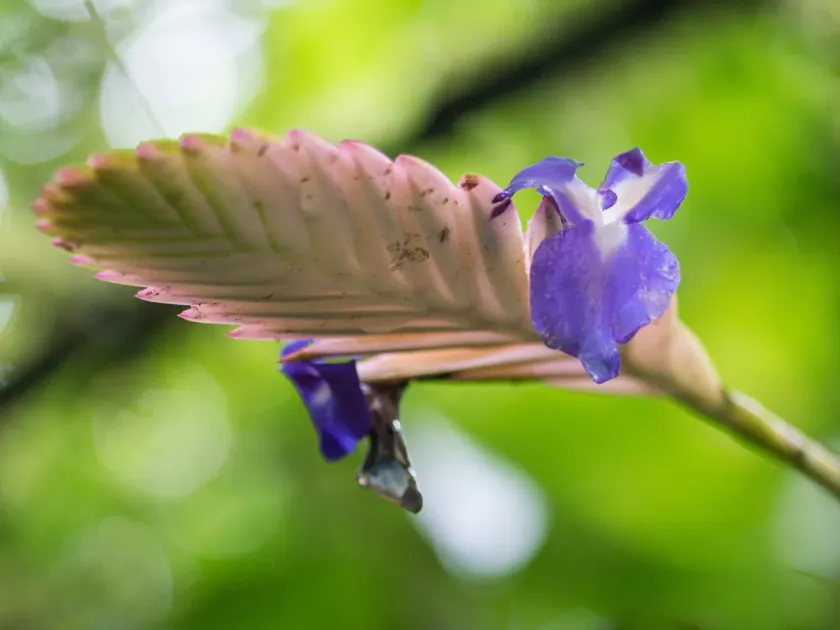
Description
Growing requirements
Tillandsia pretiosa is an attractive species belonging to the Bromeliaceae family. Native to the tropical rainforests of Ecuador, this plant naturally functions as an epiphyte, attaching itself to trees and gathering moisture from the humid atmosphere.
This crop thrives under bright, indirect light conditions. Exposure to harsh, direct sunlight will cause leaf desiccation and burns, whereas insufficient light will lead to the loss of the plant's characteristic coloration and vigor.
Climate requirements include high ambient humidity, ideally between 60% and 80%. Temperatures should remain between 20 and 25 degrees Celsius, as the plant is sensitive to thermal stress caused by sudden drops or cold drafts.
Soil or substrate requirements are specific to epiphytic plants: the medium must be extremely porous and well-draining. A typical mix consists of pine bark, sphagnum moss, perlite, and charcoal, which ensures that roots receive adequate oxygen.
Irrigation management involves keeping the substrate moist but never waterlogged. It is recommended to use soft or rainwater for watering, applying it to the substrate or misting the foliage in the early morning to simulate natural condensation.
Main diseases and pests
Tillandsia pretiosa is susceptible to common pests affecting greenhouse and indoor plants, most notably scale insects, mealybugs, and spider mites, which can proliferate rapidly in suboptimal microclimates.
Scale insects appear as hard, brown bumps on the undersides of leaves or along stems. These pests extract sap from the plant, causing yellowing and weakening of the foliage, and require systemic insecticidal treatment for eradication.
Mealybugs are easily identified by their white, cottony deposits in the leaf axils. If not controlled, they can quickly stunt the growth of the rosette, making manual removal and insecticidal soap applications necessary.
Spider mites thrive in dry conditions and can cause significant damage to the leaf structure. Regular monitoring of the foliage and maintaining proper humidity levels remain the most effective preventive measures against infestation.
Root rot and fungal pathogens represent the primary health risks, usually triggered by poor drainage or overwatering. Maintaining air circulation around the plant is essential to prevent bacterial and fungal rot development.