
Spreading airplant
Tillandsia utriculata L.
Description
Growing requirements
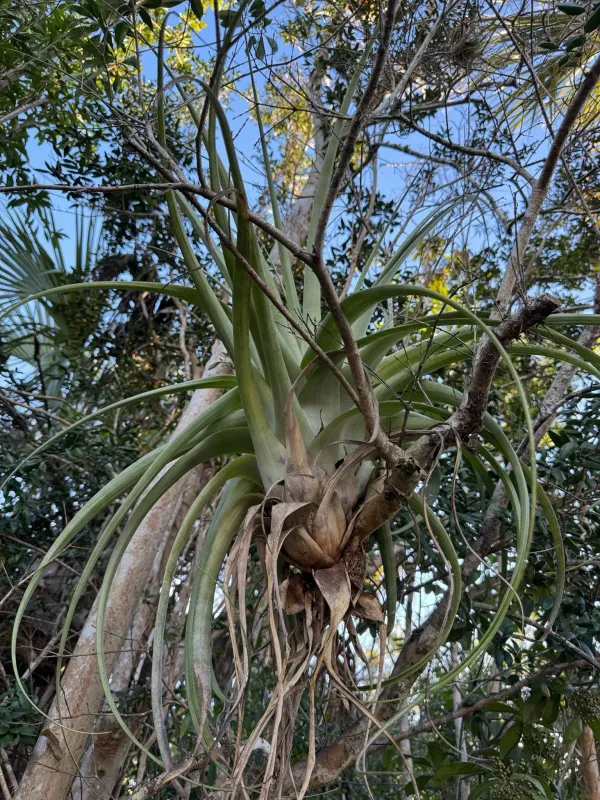
Tillandsia utriculata, commonly known as the spreading airplant, is a significant species within the Bromeliaceae family. As an epiphyte, it originates from the tropical regions of the Americas, where it typically anchors itself onto tree branches or rocky substrates without being parasitic.
This species is characterized by its large, rosette-forming structure, composed of thick, rigid leaves. It serves as an important micro-habitat in nature, as the central tank of the plant traps water and organic debris, providing nutrients for the plant itself and a habitat for small aquatic organisms.
Successful cultivation requires specific environmental conditions that mimic its native tropical climate. High air humidity is essential, as the plant lacks functional roots for soil nutrient uptake and instead relies on specialized scales known as trichomes to absorb water and nutrients directly from the air.
Temperature requirements for this airplant range between 18°C and 28°C. It is highly sensitive to frost and sudden temperature drops, which can severely damage the cellular structure of the leaves. Maintaining a stable, warm environment is critical for its health and longevity.
Bright, indirect light is necessary for healthy growth. While it enjoys exposure to morning sun, intense midday light can scorch the foliage. Proper air circulation is mandatory, as it prevents the stagnation of water in the leaf axils, which is a common cause of rot in many bromeliad species.
Main diseases and pests
The primary threats to Tillandsia utriculata are linked to improper watering and poor ventilation. Excessive water trapped in the central rosette, especially in cooler conditions, often leads to crown rot, a condition that is frequently fatal if not addressed immediately.
Pest management involves monitoring for common insects such as mealybugs and scale, which can hide deep within the base of the leaves. Early detection is essential, as these pests can weaken the plant and make it more susceptible to opportunistic secondary infections.
- Fungal and bacterial rot due to water stagnation.
- Infestation by mealybugs and scale insects.
- Salt buildup on trichomes from hard water usage.
- Sunscald resulting from intense, direct sunlight exposure.
- Natural monocarpic death after the plant finishes flowering.