
Tillandsia hybrid
Tillandsia utriculata L. x T. stricta Sol. Ex Ker Gawl.
Description
Growing requirements
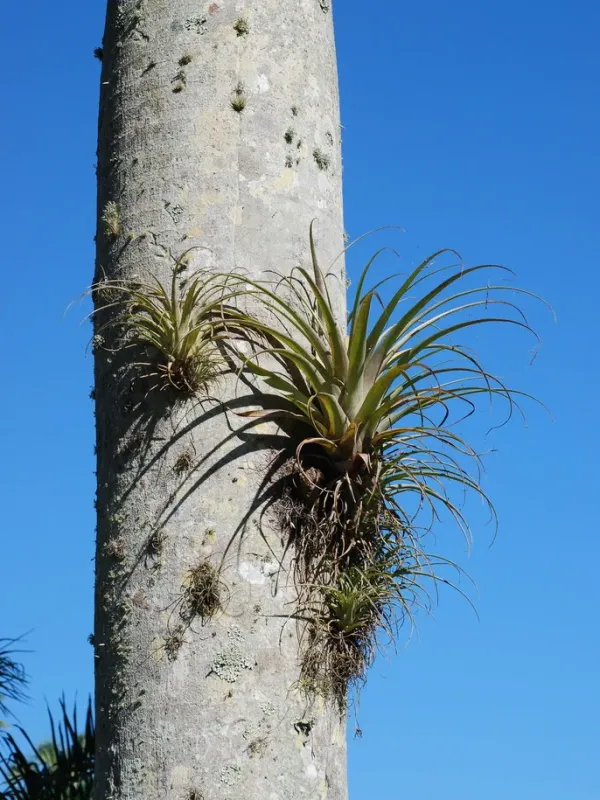
Tillandsia hybrid is a specialized ornamental plant derived from the cross-breeding of Tillandsia utriculata and Tillandsia stricta. Belonging to the Bromeliaceae family, this plant is categorized as an epiphyte, specialized in growing on other surfaces without traditional soil.
Its natural distribution covers tropical landscapes in the Americas, where it thrives in humid environments. The plant captures moisture and nutrients through specialized leaf scales called trichomes, which are a characteristic feature of this species' adaptation strategy.
Botanically, the plant consists of a rosette of stiff, tapered leaves. The hybrid nature of this species often results in unique foliage colorations and more vibrant inflorescences compared to the parent plants, making it highly desirable for horticultural use.
Successful cultivation requires high ambient humidity levels and bright, filtered light. Temperatures should remain within the subtropical range, ideally from 18°C to 25°C. Providing consistent airflow is critical to prevent moisture stagnation, which is vital for the health of epiphytic roots.
In practice, these plants are often mounted on cork bark or driftwood, or grown in a very porous, fast-draining substrate. Watering is best accomplished by misting or occasional soaking, using only distilled or rainwater to avoid mineral buildup on the leaf surfaces.
Main diseases and pests
Common pests include mealybugs and scale insects, which often cluster deep within the tight leaf axils, making them difficult to detect. Regular inspection and wiping of the foliage with diluted insecticidal soap can effectively manage these populations.
Root and crown rot represent the most significant threats to the long-term survival of the plant. These conditions are almost exclusively caused by overwatering or insufficient drying time, which emphasizes the necessity of a well-ventilated growing area.