
Blue tillandsia
Tillandsia cyanea Linden ex K. Koch
Description
Growing requirements
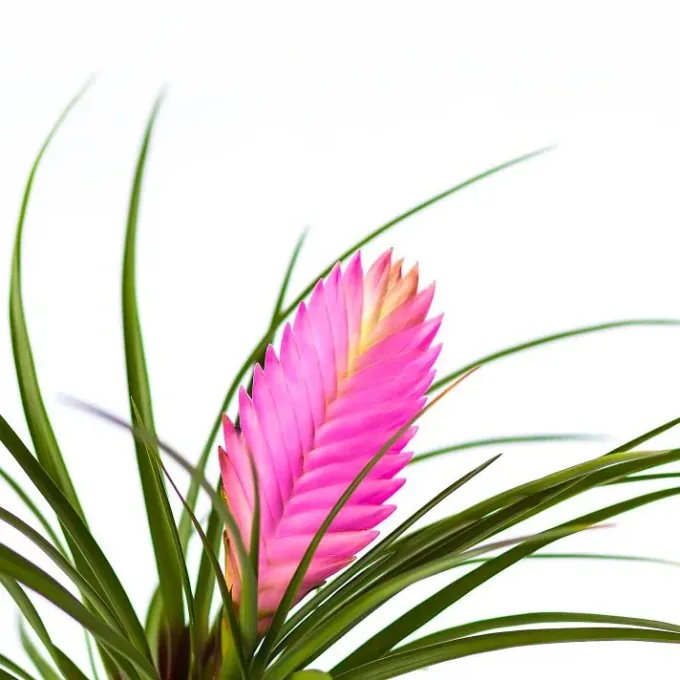
Blue Tillandsia (Tillandsia cyanea) is an herbaceous perennial epiphyte belonging to the Bromeliad family (Bromeliaceae). Native to the tropical forests of Ecuador, it is well-adapted to growth on tree branches, utilizing its roots mainly for anchorage rather than nutrient uptake.
This crop requires a stable climate with temperatures ranging from +18°C to +25°C throughout the year. It is highly sensitive to cold drafts and temperatures dropping below +16°C, which can cause physiological damage to the foliage.
Humidity is a vital factor for successful growth. As an epiphyte, it absorbs moisture through its leaves; therefore, regular misting with soft water or placing the plant in a high-humidity environment (above 60%) is essential for maintaining health.
The substrate must provide excellent drainage and aeration. A mixture composed of pine bark, sphagnum moss, and charcoal is the standard choice. Regular potting soil is not suitable as it does not provide the required air circulation for the roots.
Light requirements are focused on bright, indirect sun. Exposure to intense, direct midday sun will quickly scorch the leaves and bloom, causing irreversible aesthetic damage to the plant's unique flat, fan-shaped flower spike.
Main diseases and pests
The primary pests affecting Tillandsia cyanea include scale insects and mealybugs. These pests hide in the crevices of the rosette and feed on the plant's sap, leading to stunted growth and a weakened immune system.
Fungal diseases are common when air circulation is poor or if the substrate stays saturated for extended periods. Root and crown rot are the most dangerous conditions, often resulting in the sudden collapse of the plant.
Treatment involves the manual removal of pests followed by the application of systemic insecticides. For fungal issues, it is necessary to reduce humidity levels temporarily and use fungicides while ensuring the plant is kept in a well-ventilated area.
Preventative care is the most effective strategy. This includes inspecting new growth for signs of infestation and ensuring that the water used for misting is clean and free of excessive minerals that might accumulate on the leaves.
Proper hygiene, such as removing spent flower spikes and dead lower leaves, helps prevent disease buildup. Regular care and monitoring allow this exotic plant to thrive for several years, maintaining its distinct visual appeal.