
Tillandsia leiboldiana
Tillandsia leiboldiana Schltdl.
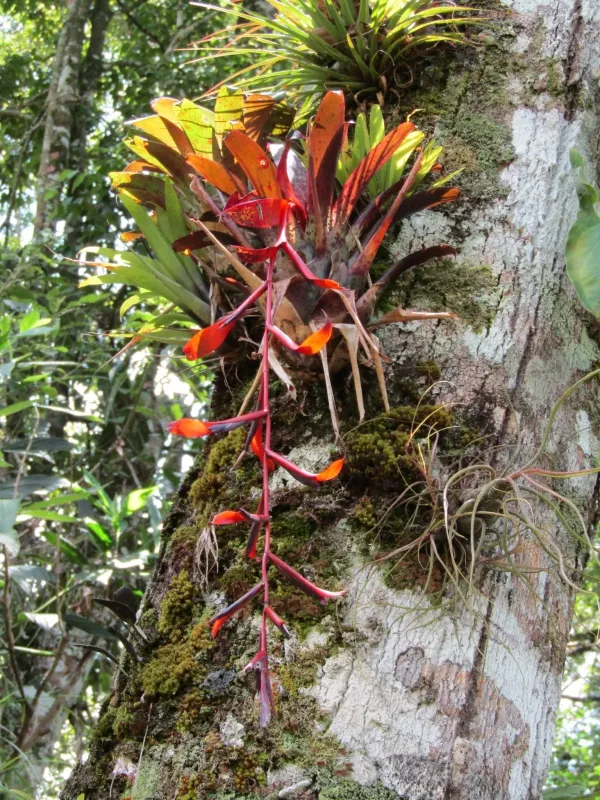
Description
Growing requirements
Tillandsia leiboldiana is a striking herbaceous perennial belonging to the Bromeliaceae family. Native to the tropical regions of Mexico and Central America, it naturally grows as an epiphyte on tree branches, thriving in humid forest environments.
The culture requires bright, indirect light to maintain its vibrant leaf color and healthy growth. Direct sunlight should be avoided as it can cause significant leaf scorch, particularly during the intensity of summer afternoons.
Maintaining high humidity is essential for the successful cultivation of this species. Ideally, ambient humidity levels should range between 60% and 80%, which can be achieved through regular misting or using a humidifier in dry indoor environments.
The temperature should ideally stay between 20°C and 25°C during the active growing season. A slight drop in temperature during the winter months is beneficial as it mimics the plant's natural dormant period and encourages blooming.
The growing medium must be highly porous to ensure proper aeration for the root system. A blend of pine bark, sphagnum moss, and charcoal is recommended to mimic the natural conditions found on tropical tree trunks.
Main diseases and pests
The most common pests affecting Tillandsia leiboldiana include mealybugs and scale insects. These pests often congregate in the tight leaf bases, making them difficult to detect until an infestation is well established.
Root and crown rot are frequent issues caused by overwatering or poor drainage. Excess water retained in the central rosette, especially in cooler conditions, promotes the growth of pathogens that can kill the plant.
Spider mites are a potential threat when ambient humidity is consistently too low. These pests can be identified by fine webbing and stippling patterns on the leaves, leading to chlorosis and stunted growth.
To prevent disease, ensure that the plant has adequate ventilation. Airflow is crucial for drying out excess moisture from the leaf axils, preventing the conditions where bacteria and fungi thrive.
Integrated pest management should include regular inspection of the leaves and the use of insecticidal soaps or systemic treatments only when necessary, ensuring the solution does not pool in the central cup for extended periods.