
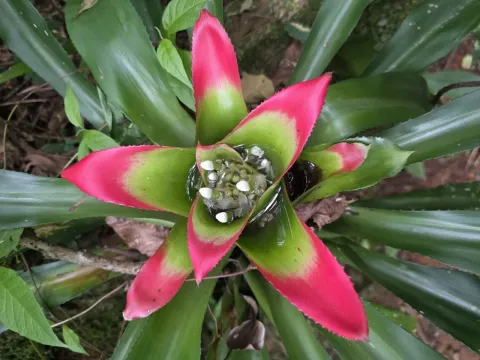
Nidularium
Nidularium
Nidularium is a perennial plant belonging to the Bromeliaceae family. Originating from the tropical rainforests of Eastern Brazil, it typically grows as an epiphyte on tree trunks or on the forest floor, relying on its tank-like rosette to collect water and nutrients from the environment.
What the section contains
Nidularium
The optimal climate for Nidularium cultivation involves stable temperatures ranging from +20 °C to +25 °C. As a tropical species, it requires high humidity levels, ideally above 60 percent, which makes it a perfect candidate for greenhouses, indoor terrariums, or well-ventilated living spaces.
Soil requirements for this culture are specific: the medium must be extremely well-draining, acidic, and airy. A standard potting mix consists of pine bark, peat moss, coarse sand, and perlite. A shallow pot is usually sufficient due to the plant's limited root system development.
Irrigation must be performed carefully; the central rosette should be kept partially filled with water, which must be refreshed regularly to prevent stagnation. The soil itself should be kept slightly moist but never waterlogged to ensure the health of the base of the rosette.
Lighting is a critical factor in maintaining the aesthetic value of the foliage and inflorescences. Nidularium performs best in bright, indirect light. Direct sunlight is harmful and will cause the leaves to bleach or develop necrotic scorched spots within a short period.
The primary pests affecting Nidularium under controlled conditions are scale insects, mealybugs, and spider mites. These pests thrive in dry indoor environments and can quickly infest the tight crevices between the leaves of the rosette.
Pathological issues typically involve root and crown rot, which are often the result of poor drainage or water stagnation in the rosette during cooler months. Proper air circulation and controlled watering regimes are the most effective management practices to prevent these plant diseases.