
Nidularium innocentii
Nidularium innocentii
Description
Growing requirements
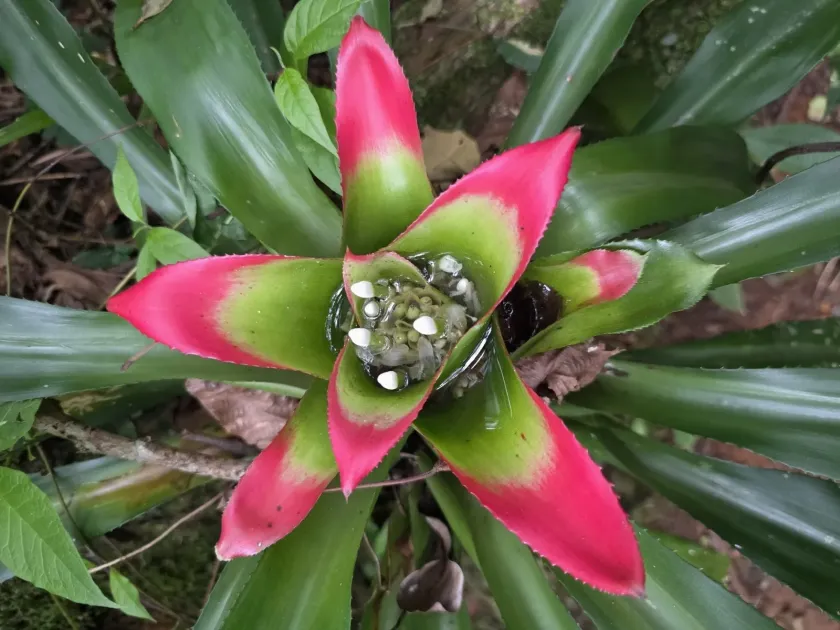
Nidularium innocentii is a perennial epiphytic plant belonging to the Bromeliaceae family. Native to the tropical rainforests of Brazil, it is highly valued in horticulture for its broad, dark green, serrated leaves and striking, nest-like bracts that form at the center.
The culture thrives in environments with bright, filtered light. Exposure to direct midday sun should be strictly avoided to prevent foliage scorching, while low-light conditions may result in a loss of the plant's characteristic vibrant color and slower growth rates.
Optimal growth requires a well-draining, acidic growing medium. An ideal substrate consists of a blend of orchid bark, peat moss, perlite, and charcoal, which ensures sufficient aeration for the root system and prevents moisture retention that could lead to rot.
Cultivation practices involve keeping the central tank (rosette) filled with fresh, dechlorinated water at all times. During the warmer months, the plant benefits from high humidity levels and regular misting to mimic the ambient conditions of its native tropical habitat.
Propagation is primarily achieved through offsets or "pups" that develop around the base of the parent plant. These should be removed when they reach approximately one-third the size of the mature rosette to ensure successful establishment and independent growth.
Main diseases and pests
Scale insects are among the most persistent pests for Nidularium species. These insects attach themselves to the undersides of leaves and along the central stem, feeding on sap and often leaving behind a sticky residue known as honeydew, which promotes sooty mold growth.
Mealybugs represent another significant threat, typically congregating in the tightly packed leaf axils. Their presence can be identified by the white, cotton-like masses they produce, which can severely weaken the plant if left untreated for an extended period.
Root rot, induced by fungal pathogens like Phytophthora, is almost exclusively caused by overwatering or using a medium with poor drainage. This condition manifests as browning or mushiness at the base of the plant, often leading to rapid decline and total loss.
Spider mites thrive in environments where the air is excessively dry and temperatures are high. These microscopic pests puncture leaf tissues, causing stippling patterns and eventual leaf desiccation, which can be mitigated by regular humidity monitoring and leaf washing.
Integrated pest management strategies involve periodic inspection of the leaf centers and base. Utilizing gentle organic oils or appropriate insecticidal soaps at the first sign of infestation provides the best defense while minimizing damage to the delicate foliage of the culture.