
Nidularium hybrid
Nidularium hybrids
Description
Growing requirements
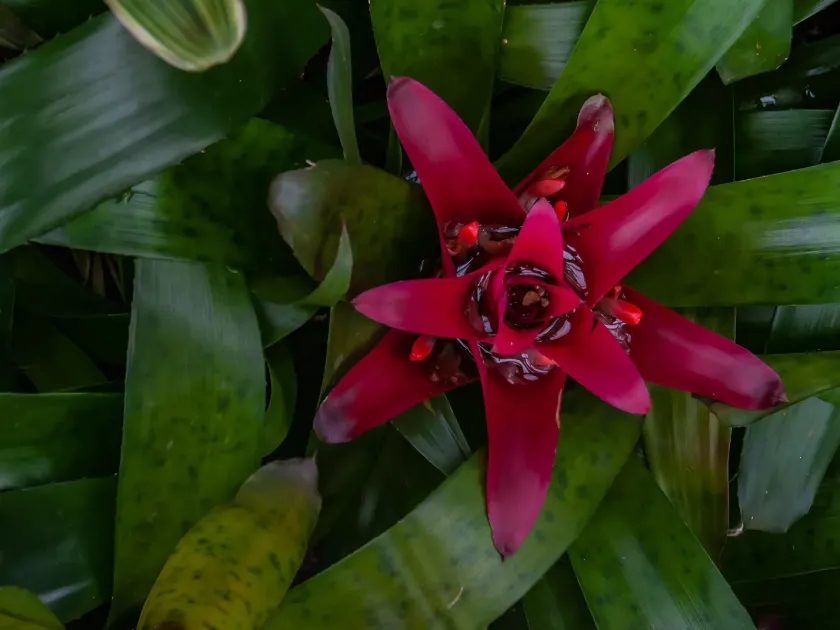
Nidularium hybrid (Nidularium hybrids) is a popular ornamental plant belonging to the Bromeliad (Bromeliaceae) family. Originating from the tropical rainforests of Brazil, these plants have evolved as epiphytes, often growing on tree trunks or in damp, leaf-littered soils in their natural habitat.
Cultivating this plant requires bright, indirect light to maintain its foliage color and health. Direct sunlight should be strictly avoided as it can cause significant leaf scorch, while too little light will inhibit the plant's ability to produce its characteristic colorful bracts.
The substrate for this culture must be highly porous and well-draining. A specialized mix consisting of peat moss, pine bark, perlite, and a small amount of charcoal is ideal. This mixture ensures proper aeration of the roots while maintaining necessary humidity levels.
Temperature management is critical for the success of this ornamental crop. The plant thrives in warm conditions, with an optimal range between +20°C and +25°C. Exposure to cold drafts or temperatures consistently below +15°C should be avoided to prevent stress and potential plant tissue damage.
Regarding water management, Nidularium should be watered by filling the central tank (rosette) with fresh, soft water. It is essential to refresh this water periodically to avoid stagnation, while keeping the growing medium slightly moist but never waterlogged to ensure the health of the root system.
Main diseases and pests
The primary pests affecting the Nidularium hybrid are scale insects and mealybugs. These pests hide in the leaf axils, sucking the plant's sap and weakening its overall structure. Early identification and manual cleaning combined with appropriate systemic insecticides are the recommended control measures.
Root rot remains the most common pathological threat, typically induced by overwatering or poor drainage. Symptoms include wilting, discolored leaf bases, and an unpleasant odor. Preventing this requires careful monitoring of the moisture levels in the substrate and ensuring adequate airflow around the plant base.