
Fascicularia bicolor
Fascicularia bicolor
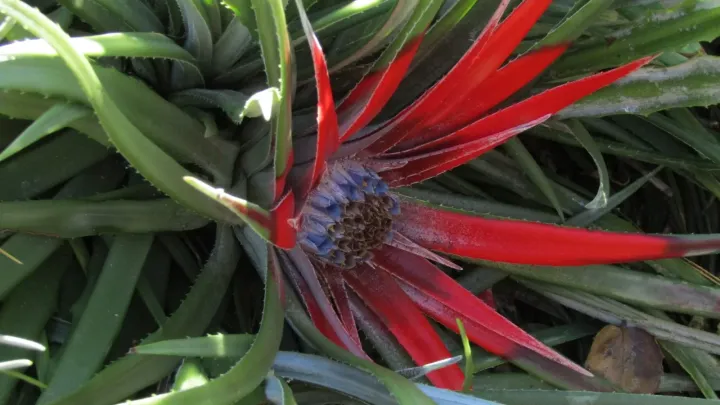
Description
Growing requirements
Fascicularia bicolor is a distinctive species within the Bromeliaceae family, native to the temperate forests of Chile. This evergreen perennial is known for its dramatic transformation during flowering, where central leaves turn a vibrant, striking red.
To cultivate this species effectively, it is necessary to mimic its native environmental conditions. The plant requires well-draining, slightly acidic soil that prevents moisture retention around the root system, which is vital for long-term health.
Light intensity is a critical factor for successful growth; while it tolerates partial shade, adequate light is needed to trigger the color change in the foliage. Overexposure to harsh, direct sunlight during peak hours can cause leaf scorch.
Climatic requirements involve moderate temperature management. While it is hardier than many tropical bromeliads, it thrives in protected environments like conservatories or glasshouses where it is shielded from severe frost and wind.
Agrotechnical maintenance includes targeted watering and periodic fertilization. Since the plant absorbs nutrients through its leaf rosette, balanced liquid fertilizer should be applied sparingly, primarily during the spring and summer active growth phase.
Main diseases and pests
Root rot caused by stagnant water is the most common physiological disorder affecting Fascicularia bicolor. Ensuring high-quality drainage material in containers or raised beds is the primary defense strategy for growers.
Mealybugs are a significant pest concern, often colonizing the tight spaces within the rosette. These pests can be difficult to eradicate once an infestation is well-established, requiring persistent manual cleaning and insecticide application.
Spider mites frequently attack the foliage, particularly in environments with poor ventilation and low humidity. Regular misting and monitoring the underside of leaves are essential practices for early detection and prevention.
Scale insects may also affect the plant, causing yellowing and stunted growth. Infected plants should be isolated immediately to prevent the spread of the pest to other sensitive botanical specimens within the collection.
Fungal leaf spot pathogens can emerge if the center of the rosette remains damp for extended periods in low light. Improving air circulation around the canopy is essential to inhibit the germination of fungal spores.