
Cryosophila stauracantha
Cryosophila stauracantha
Description
Growing requirements
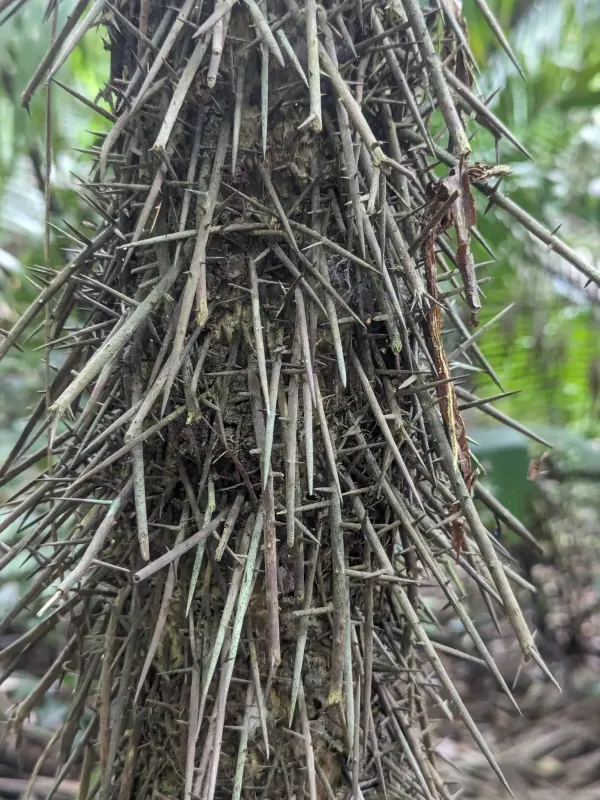
Cryosophila stauracantha, belonging to the Arecaceae family, is a distinct palm species native to the tropical rainforests of Central America. It is widely recognized for its unique aerial root spines that develop along the trunk.
The plant thrives in warm, humid climates and is highly intolerant of frost. In agricultural or horticultural settings, it requires a stable environment where temperatures remain consistently above 20 degrees Celsius.
Regarding soil requirements, this palm prefers well-draining, nutrient-rich soil that mimics the organic-heavy forest floor. Good aeration is essential to prevent root asphyxiation and subsequent decay.
While the palm is shade-tolerant, it grows most vigorously under bright, filtered light. Protecting the foliage from intense direct sun is necessary to prevent leaf scorching and desiccation of the plant tissue.
Humidity management is crucial for the success of this culture. In controlled environments, consistent misting or specialized humidification systems are required to ensure the plant remains in optimal physiological state.
Main diseases and pests
Root rot, driven by overwatering and poor drainage, remains the most significant threat to the health of this species. Once established, fungal pathogens can quickly compromise the palm's vascular system.
Common arthropod pests include spider mites and mealybugs, which thrive in low-humidity environments. These pests feed on the undersides of leaves, resulting in stunted growth and eventual foliage necrosis.
Poor air circulation within greenhouses often leads to the development of leaf spot diseases. Implementing fans or ventilation systems is a standard preventive measure against these fungal issues.
Nutritional deficiencies, such as potassium or magnesium shortages, often manifest as yellowing or spotting on the older leaves. Addressing these deficiencies early with appropriate fertilizer applications is essential.
Physical damage to the trunk can also serve as an entry point for opportunistic pathogens. It is recommended to minimize handling of the main stem and to sanitize pruning tools after every use.
Harvesting
The primary use of Cryosophila stauracantha is ornamental, valued for its striking appearance in botanical gardens and private landscaping projects. It serves as a focal point in tropical garden designs.
Historically, the large, fan-shaped leaves of this species have been utilized for thatching roofs in local communities within its native range. The leaves are prized for their durability and water-repellent properties.
Propagation is primarily achieved through seeds, which require specific conditions for germination. Maintaining high soil temperature and moisture is necessary to achieve a reasonable germination rate over several months.
Maintenance of the palm involves the careful removal of senescent leaves. Gardeners must handle the tree with caution due to the sharp, woody root spines that arm the trunk, which can cause injury.
Ongoing care focuses on maintaining a balanced nutrition program, especially for container-grown specimens. Applying micronutrient-rich fertilizers supports the development of the palm's signature foliage.