
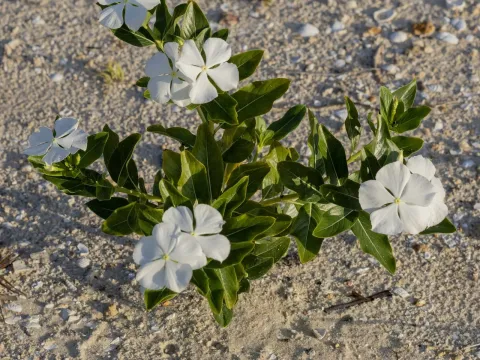
Madagascar periwinkle
Catharanthus
Madagascar periwinkle is a warm-season crop that is typically propagated from seeds. In temperate regions, sowing should begin indoors in late winter or early spring to ensure a long enough growing season.
What the section contains


Madagascar periwinkle
The seeds require darkness to germinate effectively. They should be sown about 0.5 centimeters deep in a sterile, well-draining seed-starting mix and covered to block out light.
Maintaining a temperature between 22 and 25 degrees Celsius is crucial for consistent germination. The growing medium must remain moist but never waterlogged to prevent damping-off disease.
Seedlings should be transplanted into individual pots once they develop two sets of true leaves. Proper spacing is essential to encourage healthy root development and air circulation.
Hardening off is a mandatory process before moving the plants to their final outdoor location. This helps the young plants acclimatize to direct sunlight and fluctuating temperatures.
Belonging to the Apocynaceae family, the Madagascar periwinkle is a perennial subshrub native to the island of Madagascar. It is globally cultivated both as an ornamental and a pharmaceutical crop.
The plant thrives in full sun, which is necessary for optimal vegetative growth and the accumulation of vital alkaloids. Shaded locations result in leggy plants and reduced medicinal quality.
Soil requirements include excellent drainage and a slightly acidic to neutral pH. Sandy or loamy soils are ideal, provided they are rich in organic matter to support steady growth throughout the season.
While the plant is known for its drought tolerance, consistent moisture during the early establishment phase is necessary. Mature plants can withstand drier conditions, but extreme drought will limit yield.
Regular fertilization is beneficial, especially for crops grown for biomass. A balanced NPK fertilizer applied during the active growth phase helps promote dense foliage and continuous flowering.
Root rot is the most significant threat to this crop, usually caused by overwatering or poor soil drainage. Maintaining a dry crown area is essential to prevent fungal infection.
Powdery mildew is a common issue during periods of high humidity or poor ventilation. Implementing proper spacing and thinning crowded plants can mitigate the risk of fungal outbreaks.
Aphids and spider mites are the primary pests affecting Madagascar periwinkle. These insects feed on sap, causing yellowing and stunted plant development.
The plant is susceptible to phytoplasma-based diseases, such as "little leaf," which can lead to severe deformation. Infected plants should be promptly removed and destroyed to prevent spread.
Integrated pest management strategies, including the use of neem oil or targeted insecticidal soaps, are recommended for controlling pest populations while preserving the safety of the medicinal crop.
The primary agricultural use of Catharanthus roseus is in the pharmaceutical industry. It serves as a major source of indole alkaloids, specifically vinblastine and vincristine used in chemotherapy.
The harvest of the aerial parts occurs during the peak flowering stage, which is when the concentration of the targeted alkaloids is at its highest point in the stems and leaves.
After harvesting, the biomass must be dried immediately in a controlled environment. High-quality drying equipment is used to ensure the alkaloids do not degrade due to excessive heat or moisture.
The dried raw material is then stored in cool, dark, and dry conditions to maintain its pharmaceutical potency until it is processed into extracts or refined active ingredients.
Beyond its industrial medical importance, the Madagascar periwinkle remains a cornerstone of the ornamental plant trade due to its ease of care and long-lasting blossoms in urban landscapes.