
Macoubea
Macoubea
Macoubea is a genus of evergreen trees belonging to the Apocynaceae family. These plants are native to the tropical rainforests of South America, particularly thriving in the humid conditions of the Amazon basin.
What the section contains

Macoubea
The culture requires a consistently warm tropical climate with no frost exposure. Temperature stability is essential for the vegetative growth and physiological processes of the tree throughout the entire calendar year.
Soil requirements focus on deep, well-draining, and nutrient-rich substrates. The plant is sensitive to waterlogging, necessitating excellent drainage systems if grown in areas prone to heavy rainfall or high water tables.
Light management is crucial, as the tree naturally inhabits the understory or mid-canopy layer. Providing filtered light or shade for young trees is recommended to prevent leaf scorch and ensure healthy development.
Agronomic practices involve maintaining high ambient humidity and moderate soil moisture levels. Propagation is typically achieved through fresh seeds, which require specific temperature controls and high humidity to ensure successful germination.
The primary economic value of Macoubea relates to the collection of latex found within the tree's bark and tissues. This milky sap is extracted through careful incisions, a process practiced in traditional agroforestry systems.
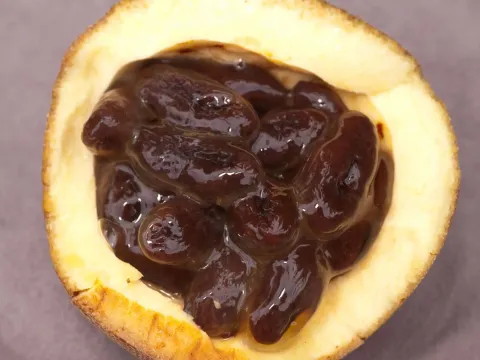
The fruit of Macoubea is edible and holds local significance for its nutritional content and flavor. Harvesting is performed when the fruits reach physiological maturity, identified by color changes and scent.
Timber utilization is limited but localized, used for small construction projects and artisanal goods. Processing the wood requires specialized drying techniques to manage the residual latex content within the fibers.
Harvesting strategies are mostly manual due to the delicate nature of the fruits and the specific distribution of latex-bearing branches. Harvesters often use traditional tools to ensure safety and preserve the tree's health.
Sustainable harvesting protocols dictate that incisions for latex must be spaced out to allow the tree to recover. Continuous monitoring is vital to ensure that the yield does not compromise the longevity of the individual tree.