
Madagascar periwinkle
Catharanthus roseus (L.) G. Don
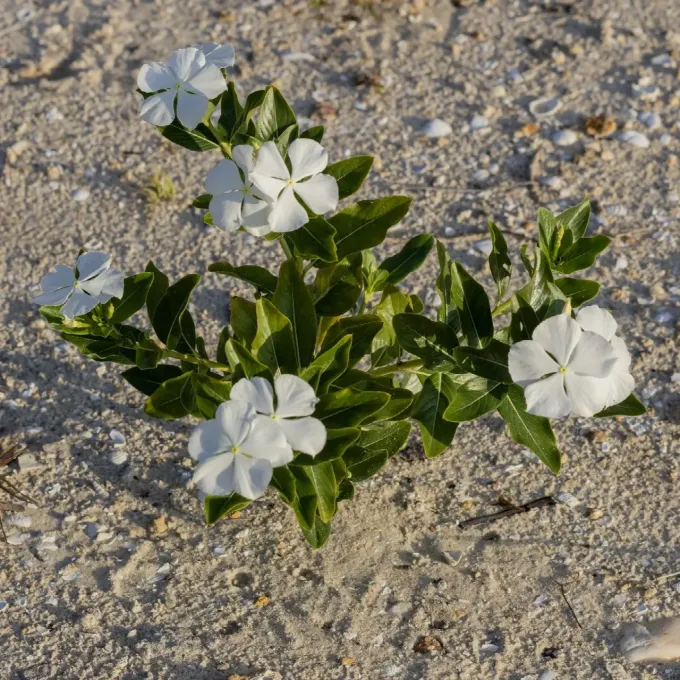
Description
Sowing dates
Madagascar periwinkle is a tender perennial typically grown as an annual in cooler climates. Seeds should be sown indoors in late winter, about 10 to 12 weeks before the expected last frost date to ensure strong plant development.
Germination requires a consistent temperature between 22 and 25 degrees Celsius. Seeds are light-sensitive and must be covered with an opaque material to maintain darkness during the initial germination phase until sprouts emerge.
A well-draining, sterile, and nutrient-rich potting medium is essential for successful seedling growth. The soil should be kept lightly moist, but not waterlogged, as young roots are highly susceptible to damping-off fungi.
Seedlings should be transplanted into individual pots once they develop their first set of true leaves. Because the plant has a somewhat sensitive root system, handling should be gentle to avoid transplant shock and stunting.
Transplanting into the field or permanent containers should only occur after soil temperatures have risen significantly. Acclimatizing the seedlings through a hardening-off process is crucial to help them adapt to direct sun and fluctuating outdoor temperatures.
Growing requirements
Catharanthus roseus belongs to the Apocynaceae family and thrives in full sun. High light exposure is vital not only for aesthetic flowering but also for the biosynthesis of indole alkaloids, which are the plant's primary commercial value.
The crop prefers fertile, loamy, or sandy soils that possess excellent drainage. Heavy clay soils must be amended with organic matter or sand to prevent water stagnation, which is one of the most common causes of crop failure.
The plant grows best in warm environments with temperatures between 20 and 30 degrees Celsius. Exposure to temperatures below 10 degrees can severely restrict growth and may lead to root rot if the soil moisture is not carefully managed.
Watering should be managed consistently, allowing the soil to dry out slightly between waterings to encourage root health. Drip irrigation is often preferred in commercial settings to keep foliage dry and reduce the incidence of fungal pathogens.
Balanced fertilization is necessary throughout the active growing season. A fertilizer containing a mix of essential micronutrients and a lower nitrogen ratio promotes both high biomass production and increased concentration of secondary metabolites.
Yield
The commercial cultivation of Madagascar periwinkle is primarily aimed at harvesting biomass for pharmaceutical extraction. The concentration of alkaloids like vinblastine and vincristine determines the crop's economic worth.
Yield is measured by the total dry weight of harvested aerial parts. Under optimal conditions, a well-managed plantation can produce significant yields, though this varies based on soil quality, sunlight intensity, and planting density.
Harvesting for medicinal purposes is timed to coincide with the peak flowering phase, where the metabolic activity in the leaves and stems results in the highest concentration of desired chemical compounds.
Technological inputs, including growth regulators and precise irrigation schedules, are used to maximize biomass density per hectare. These practices are essential for achieving the efficiency required by large-scale pharmaceutical manufacturers.
Post-harvest processing involves immediate drying to preserve the alkaloids. Temperature control during this phase is critical, as excessive heat can degrade the complex organic compounds necessary for medicine production.
Main diseases and pests
Root rot caused by Phytophthora and Pythium species is the most significant threat to Catharanthus roseus crops. These pathogens thrive in waterlogged conditions and can wipe out entire plantations if drainage is inadequate.
Viral diseases, such as the periwinkle yellows or mosaic viruses, often lead to stunted growth and leaf discoloration. Management relies heavily on controlling insect vectors, particularly leafhoppers and aphids, which spread the disease.
Common pests include aphids, spider mites, and whiteflies. These insects damage the plant by feeding on sap and are known to facilitate the transmission of viral pathogens, making consistent monitoring and pest control essential.
Fungal leaf spots can also occur in humid environments with poor air circulation. Providing adequate spacing between plants and utilizing preventative fungicides helps maintain the health of the leaf biomass intended for extraction.
An integrated pest management (IPM) approach is recommended to balance yield goals with environmental safety. Regular field inspections and the removal of infected plants can prevent large-scale outbreaks during the growing season.
Harvesting
Harvesting is typically performed once the plants reach the peak flowering stage. In mechanized operations, specialized equipment is used to cut the plants at a height of 5–10 centimeters above the ground.
Quality control during harvest involves ensuring that no weeds or foreign plant debris are included in the batch. Purity is a top priority for pharmaceutical processors who require clean, uniform raw material for extraction.
Transportation of the harvested material must be rapid to avoid the heat buildup that occurs in piled organic matter. Immediate processing or spread-out drying is necessary to keep the biomass stable and prevent enzymatic breakdown.
After the harvest, the fields are cleared of all remaining stems and roots to minimize the carry-over of pathogens into the next planting cycle. This sanitation step is a key component of sustainable agricultural practice for this crop.
The success of the harvest is determined by the weight of the dry material and the laboratory-verified concentration of alkaloids. Precise timing and careful handling ensure that the final product meets the standards required for lifesaving medical applications.