
Catharanthus trichophyllus
Catharanthus trichophyllus (Baker) Pichon
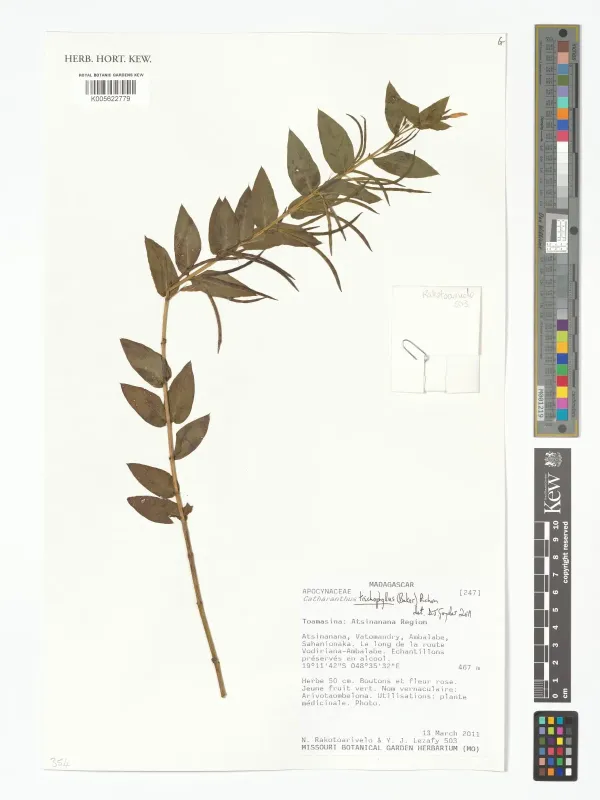
Description
Growing requirements
Catharanthus trichophyllus is a herbaceous perennial plant belonging to the Apocynaceae family. It is native to the tropical regions of East Africa, where it thrives in warm and humid ecological niches.
The plant requires well-drained, nutrient-rich soils with a neutral pH level. In an agricultural setting, it is essential to ensure that the soil structure provides adequate aeration to prevent root rot in the tropical environment.
Climatic requirements are strict: the crop demands consistent temperatures ranging from 22 to 28 degrees Celsius throughout the vegetative period. Exposure to low temperatures or frost is fatal to the plant's development.
Regarding light intensity, Catharanthus trichophyllus requires full sun exposure to maximize its metabolic functions. Sufficient light is crucial for the synthesis of complex organic compounds, which makes the plant valuable for pharmaceutical use.
Agricultural management involves careful irrigation, ensuring the substrate remains moist but not waterlogged. The use of mulch can help maintain soil moisture and prevent temperature fluctuations in the root zone.
Main diseases and pests
The most common threats to this crop include fungal infections such as Fusarium wilt, which can devastate entire fields if drainage is inadequate.
Pests like spider mites and whiteflies frequently attack the leaves, leading to reduced photosynthetic capacity and overall lower biomass yield.
Integrated pest management (IPM) strategies, including biological control agents and crop rotation, are essential for maintaining a healthy and productive plantation.
Regular surveillance for bacterial leaf spots is required, as these can spread rapidly in high-humidity conditions prevalent in tropical growing areas.
Proper sanitation, including the removal of infected debris after harvest, is mandatory to break the cycle of pathogens that persist in the soil.