
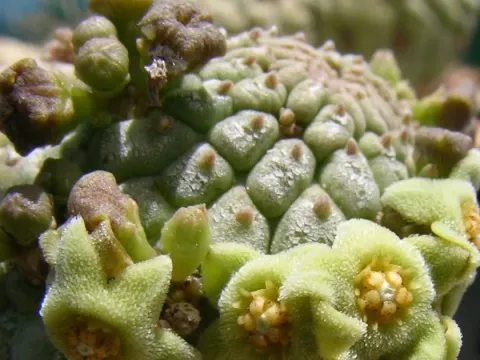
Larryleachia
Larryleachia
Larryleachia is a genus of succulent plants within the Apocynaceae family, known for their unique, cactus-like stems. These plants are prized for their botanical interest and specific, slow-growing nature in specialized collections.
What the section contains


Larryleachia
Originating from the arid regions of Southern Africa, particularly Namibia and South Africa, these plants are highly adapted to intense heat and prolonged drought. Cultivation requires mimicking these harsh, sunny conditions.
The growing medium must be highly inorganic, prioritizing excellent drainage. A substrate composed of coarse sand, pumice, and grit is ideal to prevent moisture retention and ensure proper aeration for the root system.
Light intensity is crucial; these plants thrive in full sun but require acclimatization to prevent scorching. Without sufficient light, the plant stems will lose their compact shape and become etiolated.
Watering requires strict discipline, with water provided only during the active growing season. The soil must dry out completely between waterings, and the plants should remain almost entirely dry during the dormant winter phase.
The most significant threat to Larryleachia is root rot, typically caused by overwatering or poor drainage. Once decay begins, it is often difficult to save the plant, making preventative measures essential.
Mealybugs are a common pest that thrives in the crevices of the succulent stems. They can be difficult to eradicate due to their ability to hide, requiring consistent monitoring and use of appropriate insecticides.
Spider mites may affect the plants during periods of low humidity or stagnant air circulation. Keeping the area well-ventilated is the best natural defense against these small pests.
Fungal infections can occur when moisture is trapped against the plant's surface. Good air movement is a critical component of successful plant management to reduce the risk of mold or mildew.
Cultural mistakes, such as using nutrient-rich organic soil, make the plant more susceptible to diseases. Maintaining a sterile, mineral-based environment is the foundation for healthy growth and resistance to common threats.