
Haemanthus albiflos
Haemanthus albiflos
Description
Growing requirements
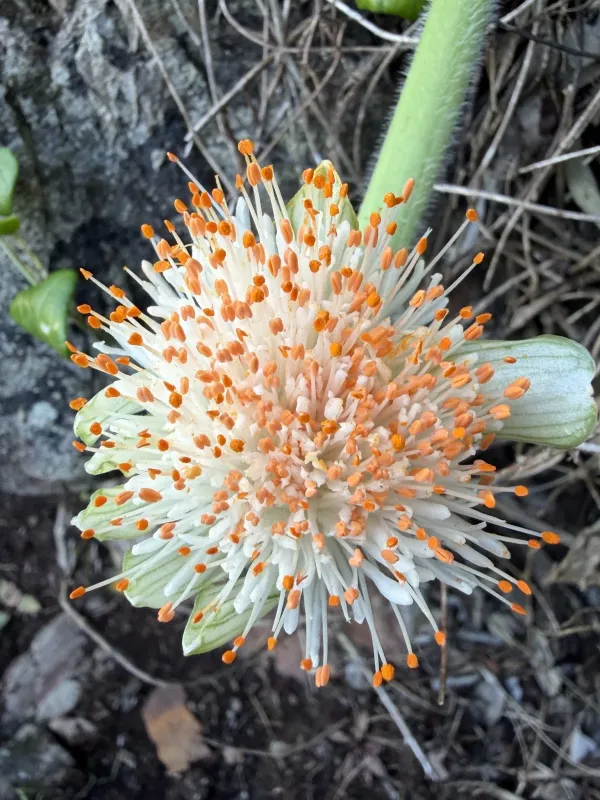
Haemanthus albiflos, commonly known as the white paint brush or elephant's tongue, is a distinct bulbous species belonging to the Amaryllidaceae family. Originally native to South Africa, it is widely recognized for its thick, tongue-shaped leaves and white, brush-like flower heads.
Cultivation requires bright, indirect light to maintain the vigor of the fleshy leaves. Intense direct sunlight should be avoided during the peak of the day, as it often causes sunburn, whereas low-light conditions may lead to stunted growth and failure to bloom.
The soil structure must be porous and well-draining, similar to that used for succulents. A mixture of loam, coarse sand, and perlite provides the necessary aeration, preventing root asphyxiation which is the primary cause of plant failure in home settings.
Water management is critical; the plant should be watered sparingly, allowing the growing medium to dry out almost completely between sessions. During the winter dormancy phase, the water supply must be significantly reduced to mimic the plant's natural dry season.
The cultural value of this species lies in its evergreen nature and its ability to thrive in constrained root space. It is commonly utilized in interior landscaping and as a specimen plant for enthusiasts focusing on drought-tolerant bulbous geophytes.
Main diseases and pests
The most significant threat to Haemanthus albiflos is bulb rot, usually triggered by excessive moisture and poor drainage. This condition often results in the sudden decline of the plant, characterized by yellowing foliage and soft, mushy bulb tissue.
Pests such as mealybugs and aphids may colonize the leaf axils, particularly in stagnant air environments. Control measures include mechanical removal of visible pests and the application of horticultural soaps or specialized systemic insecticides when infestations persist.