
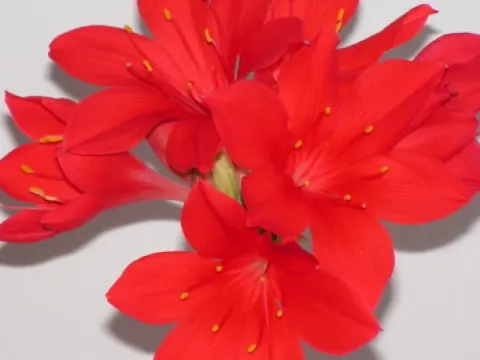
Cyrtanthus
Cyrtanthus
Cyrtanthus is a genus of perennial bulbous plants belonging to the Amaryllidaceae family. Originating primarily from South Africa, these plants have adapted to various habitats, ranging from grasslands to rocky slopes.
What the section contains
 Cyrtanthus angustifolius
Cyrtanthus angustifolius
Cyrtanthus angustifolius
 Cyrtanthus elatus
Cyrtanthus elatus
Cyrtanthus elatus
 Cyrtanthus falcatus
Cyrtanthus falcatus
Cyrtanthus falcatus
 Cyrtanthus hybrid
s
Cyrtanthus hybrid
Cyrtanthus hybrids
 Cyrtanthus mackenii
Cyrtanthus mackenii
Cyrtanthus mackenii
 Cyrtanthus spiralis
Cyrtanthus spiralis
Cyrtanthus spiralis
 Cyrtanthus staadensis
Cyrtanthus staadensis
Cyrtanthus staadensis
 Cyrtanthus suaveolens
Cyrtanthus suaveolens
Cyrtanthus suaveolens
 Cyrtanthus tuckii
Cyrtanthus tuckii
Cyrtanthus tuckii
 Fire Lily
Cyrtanthus brachyscyphus
Fire Lily
Cyrtanthus brachyscyphus
Cyrtanthus
The botanical structure of Cyrtanthus consists of a tunicate bulb and linear or strap-shaped leaves. Its most distinctive feature is the inflorescence, which often carries tubular, pendulous flowers ranging from bright red and orange to yellow and creamy white.
For successful cultivation, the soil must be highly porous and well-draining. A mixture of loam, leaf mold, and sharp sand is considered ideal for maintaining the necessary aeration around the root system.
Lighting requirements are specific: the plants thrive in bright, indirect sunlight. Protecting the foliage from intense midday heat is crucial to prevent dehydration and leaf scorching during the active growing season.
Temperature management is key to triggering the blooming cycle. During the growing phase, temperatures between +18°C and +24°C are optimal, followed by a cool, dry dormancy period at approximately +10°C.
Cyrtanthus is susceptible to common greenhouse pests such as spider mites, aphids, and mealybugs. These pests usually colonize the underside of the leaves, causing chlorosis and stunted development.
Root rot and bulb rot are the primary threats caused by improper moisture management. If the substrate remains waterlogged for extended periods, the bulb tissues soften and lose their ability to support the plant.
Effective prevention involves careful inspection of the bulbs before planting and maintaining a strict watering schedule that prevents soil saturation. Ensuring good air circulation prevents the development of fungal spores.
In cases of infestation, insecticidal soaps or systemic treatments may be applied. However, caution is advised as the genus can be sensitive to certain chemical concentrations, so small-scale testing is recommended.
Proper hygiene, such as removing dead leaf tissue and debris from the soil surface, significantly reduces the habitat for potential pathogens, ensuring the long-term health and productivity of the plant.