
Oscularia deltoides
Oscularia deltoides
Description
Growing requirements
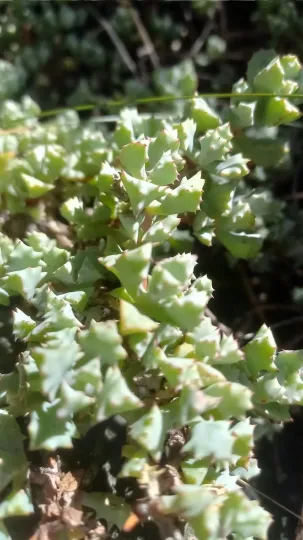
Oscularia deltoides is a perennial succulent plant belonging to the Aizoaceae family. Native to South Africa, it is widely appreciated for its unique, triangular, blue-grey foliage and small, daisy-like pink flowers.
This species is highly adapted to arid environments and thrives in full sun exposure. Adequate light intensity is crucial for maintaining its compact, creeping habit and distinctive glaucous leaf coloration.
The plant requires extremely well-draining soil to prevent root issues. A standard succulent potting mix, amended with extra grit or perlite, is recommended to ensure that water passes through the pot quickly.
Temperature management is a key factor in the successful cultivation of Oscularia deltoides. It is not frost-tolerant and should be kept in temperatures above 10 degrees Celsius during the colder winter months.
Watering should be performed carefully, following the soak-and-dry method. During the active growth season, water deeply, then allow the substrate to dry out completely before providing the next hydration.
Main diseases and pests
The most common threat to the health of Oscularia deltoides is root rot. This condition is almost exclusively caused by overwatering or soil that retains moisture for too long, leading to tissue decay.
Pest issues often involve mealybugs, which are small white insects that cluster in the crevices between leaves. Spider mites can also occur, especially in environments with low humidity and high heat.
To combat infestations, growers should use appropriate insecticidal soap or neem oil treatments. Manual removal of pests with a cotton swab dipped in alcohol is effective for small, early-stage infestations.
Maintaining proper airflow around the plant is the best preventive measure against both fungal infections and pest outbreaks. Crowded conditions in greenhouse settings can lead to rapid spread of pathogens.
It is important to keep the crown of the plant dry. If water gets trapped between the tight clusters of succulent leaves, it can create a humid microclimate that encourages the growth of mold or opportunistic bacteria.