
Faucaria felina
Faucaria felina
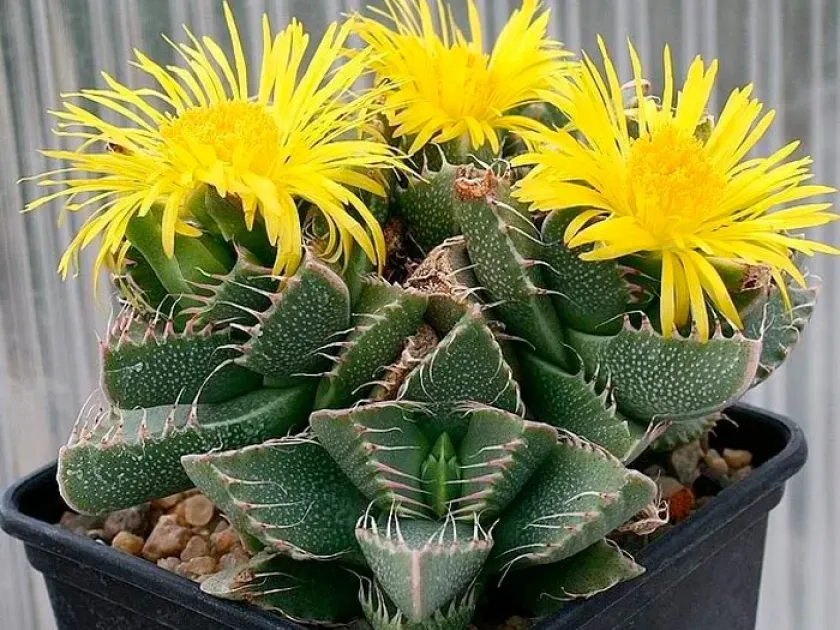
Description
Sowing dates
Faucaria felina is a succulent plant belonging to the Aizoaceae family, native to the arid landscapes of South Africa. Cultivation usually starts from seeds, which should be sown in a well-draining, sandy substrate.
The optimal time for sowing is during the early spring months. Seeds need a warm environment, ideally between 20 and 22 degrees Celsius, to ensure successful germination and seedling development.
Maintaining high humidity during the germination phase is critical, but this must be balanced with frequent ventilation to prevent damping-off disease. A transparent cover can be used to create a greenhouse effect.
Once seedlings develop their first true leaves, they should be gradually acclimated to lower humidity levels. This transition ensures the young plants become resilient enough for standard maintenance conditions.
Propagation can also be achieved by separating offsets from a mature parent plant. This method is often preferred for maintaining the specific genetic traits and ensuring faster growth compared to seeds.
Growing requirements
Faucaria felina thrives in bright, direct sunlight. Placing the plant in a south-facing window is essential to maintain the characteristic compact shape and the distinct "teeth" along the leaf margins.
The soil mixture must prioritize drainage. A professional mix for this culture includes coarse sand, pumice, or perlite combined with a small amount of potting soil. The pH should be neutral to slightly acidic.
Watering requires careful management. The soil must be allowed to dry out completely between waterings, even during the active growing season. Overwatering is the most common cause of root rot in this species.
The plant requires a cooling period in winter. During this dormant phase, temperatures should be kept around 10–12 degrees Celsius, and water should be withheld almost entirely to prevent etiolation.
Good air circulation is vital for the health of Faucaria felina. Stagnant air combined with moisture can lead to fungal issues, so the plant should never be kept in overly cramped or humid areas.
Main diseases and pests
The most significant threat to the health of Faucaria felina is root rot caused by improper watering techniques. Excessive moisture leads to a rapid decay of the fleshy root structure.
Mealybugs are the most common pests that infest these succulents, usually hiding in the crevices between the leaves. They extract sap and can cause the plant to weaken and develop secondary fungal infections.
Spider mites can also become a problem if the environment is too dry and lacks air movement. Their presence is marked by fine webbing and small yellow dots on the surface of the thick, succulent leaves.
Regular monitoring of the plant's health is the best form of defense. If pests are detected, targeted application of appropriate insecticides is necessary to stop the spread.
- Ensure excellent drainage in all pots.
- Keep the foliage dry during watering.
- Periodically inspect the base of the plant.
- Use sterile components for soil mixtures.