
Faucaria tuberculosa
Faucaria tuberculosa
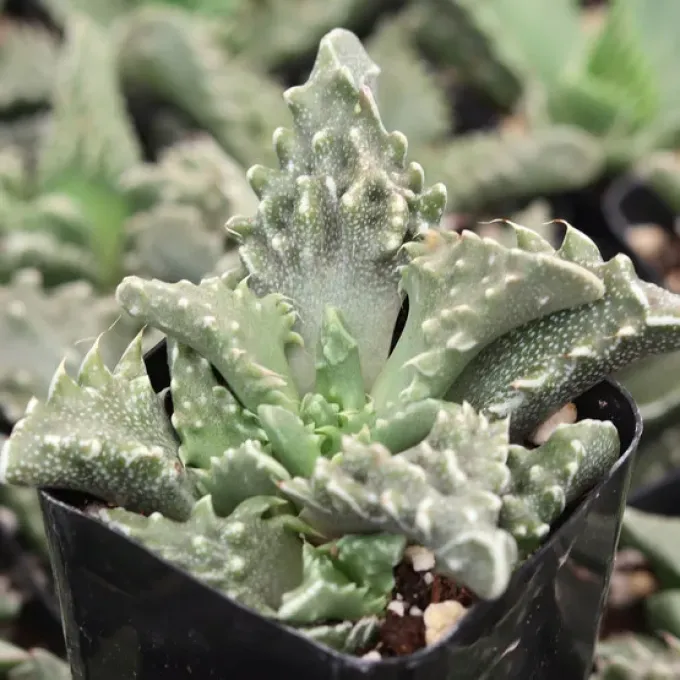
Description
Sowing dates
Sowing seeds of Faucaria tuberculosa is best performed during the spring season when the daylight hours increase and temperatures become more consistent.
A well-draining, mineral-based substrate is essential for seed germination, typically consisting of a mix of sand, grit, and very little organic matter.
Seeds should be sown on the surface of the moist soil and gently pressed down, as they require light to germinate and should not be buried deep.
The container must be kept in a greenhouse-like environment using a plastic cover to maintain high humidity levels during the initial phase.
Keeping the temperature between 20°C and 25°C ensures optimal germination rates, followed by gradual acclimation to lower humidity as the seedlings develop.
Growing requirements
Faucaria tuberculosa is a perennial succulent belonging to the Aizoaceae family, native to the arid rocky slopes of the Eastern Cape in South Africa.
This species thrives under intense light conditions and requires a location with direct sun exposure for several hours a day to maintain its compact growth form.
The potting medium must be extremely porous to ensure rapid drainage, as any water retention around the roots for an extended period is fatal to the plant.
Watering should be approached with caution, allowing the plant to dry out completely between waterings, especially during the dormant phase in winter.
Proper air circulation is crucial to mimic the natural breezy climate of its origin and to prevent the accumulation of heat and moisture on the leaf surfaces.
Main diseases and pests
Root rot is the most common and dangerous threat, typically caused by overwatering or using a soil mix that retains too much moisture for too long.
Mealybugs are frequent pests that infest the crevices between the teeth-like leaf edges, where they are often difficult to detect until the infestation spreads.
Spider mites can become problematic in dry, hot indoor environments, often manifesting as webbing and discolored patches on the surface of the foliage.
Fungal infections can occur if the plant is kept in high-humidity areas without proper ventilation, leading to black spotting on the succulent leaves.
- Use of systemic insecticides to combat sucking pests.
- Annual repotting into fresh mineral substrate.
- Strategic pruning of affected leaves.
- Regular monitoring for signs of stress or pests.