
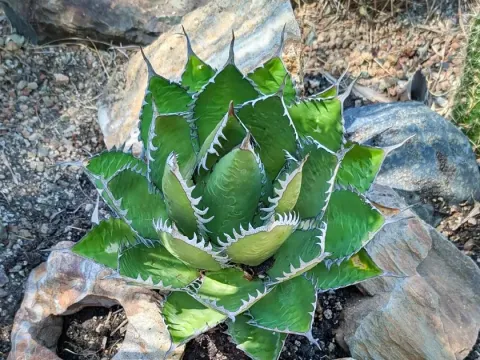
Agave pablocarrilloi
Agave pablocarrilloi
Agave pablocarrilloi is a member of the Asparagaceae family, known for its distinct botanical traits and specific distribution in the mountains of Oaxaca, Mexico. It thrives in high-altitude environments characterized by dramatic diurnal temperature variations.
What the section contains
Agave pablocarrilloi
The cultivation of this species requires well-draining, rocky soil profiles. Being a desert-adapted plant, it is extremely intolerant of waterlogged soil conditions, which can lead to root and crown rot very quickly during the rainy season.
Optimal growth conditions involve high levels of solar radiation throughout the year. The species is adapted to semi-arid climates where annual precipitation is relatively low and concentrated in specific months.
Agronomic management focuses on mimicking natural habitat conditions. Minimal fertilization is recommended to prevent excessive succulent tissue growth that could compromise the plant's structural integrity or pest resistance.
Protection from extreme frost is essential, although the plant has some natural tolerance to the cool temperatures typically found in the Mexican highlands. Proper spacing is necessary to ensure adequate airflow between plants.
Agave pablocarrilloi is commercially significant in the production of traditional agave distillates. The core of the plant, known as the "piña," is the primary source of fermentable sugars required for spirits production.
Harvesting involves carefully timing the extraction based on the plant's life cycle. Harvesters typically wait until the plant is near its reproductive maturity stage, when sugar concentration is at its peak.
The harvesting process requires manual removal of the thick, fibrous leaves to expose the succulent center. This laborious task remains a fundamental aspect of the local agave-based industry.
After harvest, the cores are processed using traditional roasting techniques. This process is critical for breaking down complex carbohydrates into fermentable sugars, which are then processed through distillation.
Sustainable harvesting practices are encouraged to ensure the long-term viability of this species in its native ecosystem. Collectors are often trained to leave a portion of the wild population to ensure natural regeneration.