
Agave mitis
Agave mitis
Description
Growing requirements
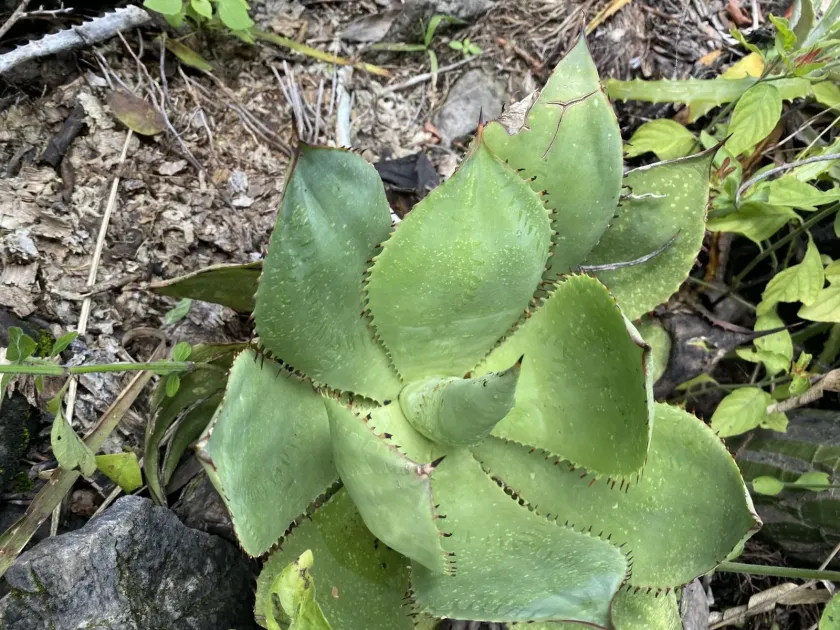
Agave mitis is a perennial succulent belonging to the Asparagaceae family. Native to the mountainous regions of Mexico, this species has adapted to survive in challenging environments characterized by rocky soil and irregular precipitation.
This plant thrives in full sun exposure, requiring at least six hours of direct light daily to maintain its compact rosette structure. In cultivation, it serves as a robust ornamental choice for xeriscaping or specialized garden beds.
Soil requirements focus on excellent drainage capacity. A mix of coarse sand, gravel, and organic matter is recommended to replicate its natural limestone-based habitat and ensure the roots do not remain saturated for extended periods.
Regarding irrigation, Agave mitis follows a strict cycle of wet and dry periods. During the active growing season, water thoroughly but only when the soil has dried out completely; reduce watering significantly during the dormant winter phase.
The plant is frost-sensitive and requires protection if temperatures drop below freezing. Proper air circulation is essential to prevent heat stress during peak summer months and to keep fungal issues at bay.
Main diseases and pests
The primary concern for Agave mitis is the development of root rot, caused by excessive moisture or compacted soil. This condition often results in the softening of the base, which can compromise the entire plant structure.
Pests such as mealybugs and scale insects are common intruders. They tend to cluster in the axils of the leaves, where they extract sap, causing stunted growth and providing entry points for viral or bacterial infections.
Spider mites represent a secondary threat, particularly in enclosed environments with low humidity. Regular inspection of the undersides of leaves is vital for early detection of these microscopic pests.
Fungal spot infections can appear if the foliage stays wet for too long. Improving ventilation and avoiding overhead irrigation are effective cultural practices to mitigate the risk of such outbreaks.
Effective management includes using systemic insecticides for infestations and strictly adhering to moisture control protocols to maintain the overall vigor and health of the plant.