
Agave pintilla
Agave pintilla
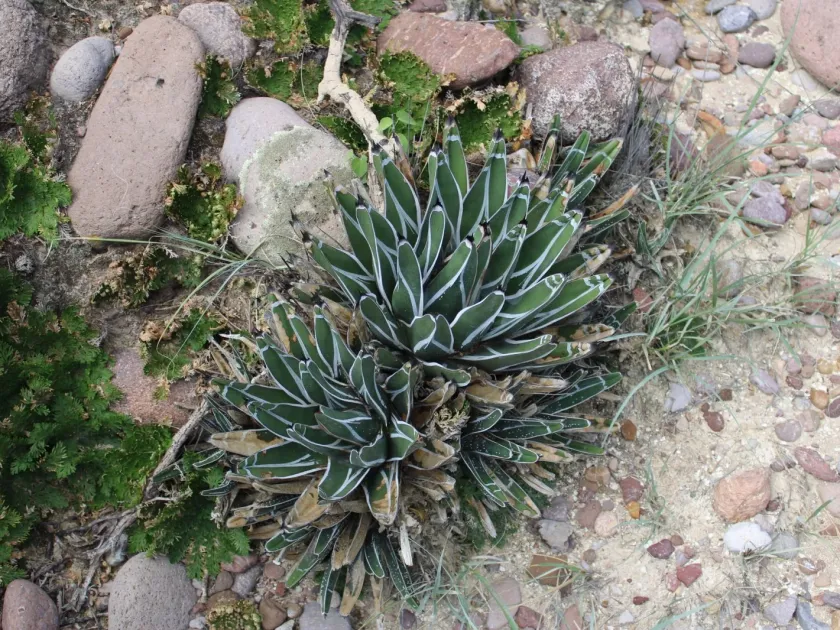
Description
Sowing dates
Agave pintilla belongs to the Asparagaceae family and is a unique succulent species native to the arid environments of Mexico. Agricultural reproduction of this crop is typically achieved through seed propagation or by removing offsets (pups) from a mature mother plant.
Seeds are sown in a highly porous, sandy substrate to ensure optimal drainage, as water stagnation is detrimental to germination. The best season for sowing is during early spring, when increased light levels promote healthy growth in seedlings.
Vegetative propagation via offsets is the preferred method for maintaining genetic uniformity in a crop. Once separated, the offsets are left in a dry environment for several days to allow the cut to callous over, which prevents rotting when they are finally planted in a new growing medium.
Young plants are particularly sensitive during their first year and require consistent, moderate care. Maintaining temperatures between 20°C and 25°C is crucial for establishing a robust root system before the plants are moved to larger outdoor plots.
Spacing is a fundamental aspect of sowing for large-scale production. Ensuring adequate room between individuals prevents overcrowding, which is essential for air circulation and long-term plant health throughout the vegetative cycle.
Growing requirements
This species demands full sun exposure to thrive, as light is the primary driver of its metabolic processes and fiber development. Shady conditions result in etiolation, where the plant grows weak, elongated leaves that are structurally unstable.
Soil requirements focus on extreme drainage. Agave pintilla thrives in rocky or sandy soils that mimic its natural habitat. Heavy, clay-rich soils should be avoided or amended with gravel and grit to prevent moisture retention at the roots.
Watering frequency should be minimal. While moderate irrigation is beneficial during the growing season, the plant must be kept dry during its dormant winter phase. Excess water is the leading cause of root rot, the most common mortality factor in agave farming.
As a desert-adapted plant, it tolerates high heat and low humidity exceptionally well. It does not require artificial misting or special atmospheric control, making it a highly sustainable choice for regions facing chronic water scarcity.
Fertilization should be handled with caution. A slow-release, low-nitrogen formula designed for succulents is sufficient. Over-fertilizing leads to succulent growth that is overly susceptible to physical damage and pest infestations.
Main diseases and pests
Fungal infections, particularly root rot, represent the most significant threat to Agave pintilla plantations. High humidity levels combined with poor soil drainage create the perfect environment for pathogenic fungi to colonize the root system.
Common pests such as mealybugs and spider mites can severely impact plant health. These insects feed on the sap, causing leaf distortion and creating entry points for secondary bacterial or fungal infections that can decimate a crop.
Integrated pest management involves regular inspections and the use of targeted insecticides when necessary. Prevention is prioritized by removing any infested material immediately and ensuring that plants have adequate physical space to prevent the rapid spread of infestations.
Environmental management, specifically avoiding over-irrigation, acts as the primary defense against disease. Maintaining clean tools and disinfecting them between rows helps prevent the accidental transmission of pathogens across the plantation.
Monitoring the crop for yellowing or softening of the base is a vital practice for early detection. By catching these signs early, agricultural managers can treat affected plants before the infection spreads to the entire plot.
Harvesting
The economic value of Agave pintilla lies in its structural fiber and the presence of inulin within its core. Harvesting is a carefully timed process that takes place once the plant reaches physiological maturity.
Harvesting techniques involve severing the lower leaves or the entire core before the onset of flowering. Flowering triggers the plant to expend all its accumulated sugars and nutrients into the rapid growth of a giant inflorescence, which significantly degrades the quality of the raw material.
Post-harvest processing includes mechanical extraction of the fibers from the leaf tissue. These fibers are noted for their high tensile strength and longevity, which make them ideal for high-quality textiles and industrial binding materials.
The extracted juice from the agave heart is often processed to produce syrups or distilled spirits. Efficiency in this stage depends on the plant's sugar content, which is maximized when the harvest cycle is strictly controlled and timed appropriately.
After the harvest, crop residues are often composted and returned to the fields as organic matter. This practice maintains soil structure and fertility, ensuring the land remains viable for future planting rotations.