
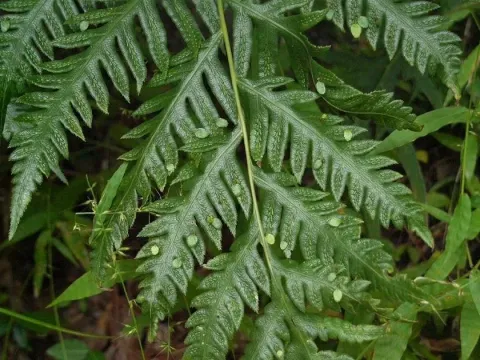
Woodwardia
Woodwardia
Woodwardia is a genus of large, perennial ferns belonging to the Blechnaceae family. These plants are primarily native to temperate and subtropical regions of the Northern Hemisphere, where they typically thrive in moist, shaded woodland environments.
What the section contains
 Giant Chain Fern
Woodwardia fimbriata
Giant Chain Fern
Woodwardia fimbriata
 Oriental chain fern
Woodwardia orientalis
Oriental chain fern
Woodwardia orientalis
 Virginia chain fern
Woodwardia virginica
Virginia chain fern
Woodwardia virginica
 Woodwardia areolata
Woodwardia areolata
Woodwardia areolata
 Woodwardia japonica
Woodwardia japonica
Woodwardia japonica
 Woodwardia martinezii
Woodwardia martinezii
Woodwardia martinezii
 Woodwardia radicans
Woodwardia radicans
Woodwardia radicans
 Woodwardia spinulosa
Woodwardia spinulosa
Woodwardia spinulosa
 Woodwardia unigemmata
Woodwardia unigemmata
Woodwardia unigemmata
Woodwardia
When selecting a planting site, it is crucial to provide partial to full shade. Direct sunlight, especially in the afternoon, can scorch the delicate fronds and cause the plant to decline in vigor, so a position under a canopy of trees is ideal.
The soil should be rich in organic matter, slightly acidic, and consistently moist. Woodwardia requires a well-draining medium; while it loves water, it will not tolerate waterlogged soil, which can lead to rapid decay of the rhizome and roots.
Climate management is essential for long-term survival. Most species are moderately hardy, but in colder regions, they benefit significantly from a layer of organic mulch applied in late autumn to protect the crown from harsh freezing temperatures.
In landscape architecture, Woodwardia is highly valued for its striking, architectural habit. It is frequently employed in damp, shady borders, around pond margins, or in rock gardens that mimic moist forest floors to enhance the overall aesthetic appeal.
The primary pests affecting Woodwardia in a garden setting are slugs and snails. These creatures are attracted to the succulent, emerging fronds in early spring and can quickly defoliate a plant if left unchecked.
Fungal issues, particularly root rot, represent the main disease threat. This usually occurs due to poor soil aeration or irrigation mismanagement. Providing ample space between plants and avoiding overhead watering can significantly mitigate the risk of infection.