
Virginia chain fern
Woodwardia virginica
Description
Growing requirements
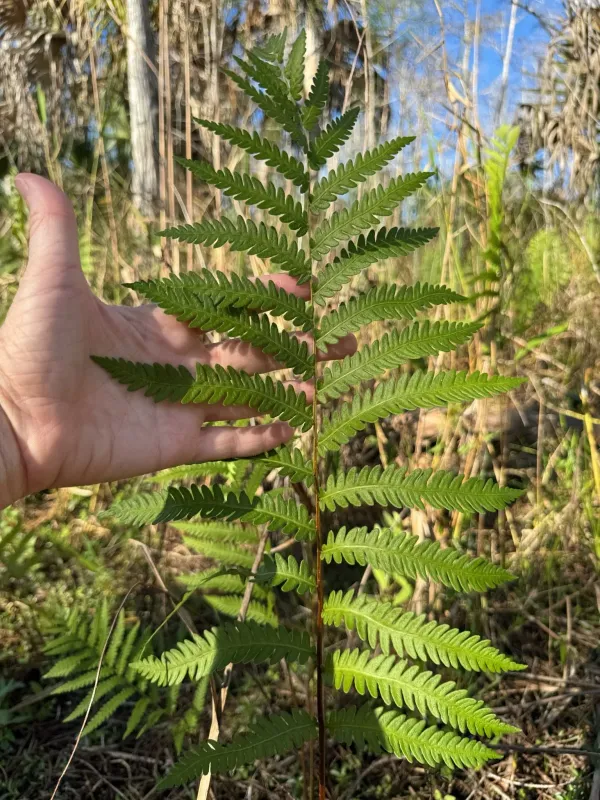
The Virginia chain fern (Woodwardia virginica) is a perennial fern belonging to the family Blechnaceae. It is characterized by its creeping rhizomes and large, pinnate fronds that can grow quite tall in ideal wetland environments.
Native to North America, this species is typically found in swamps, marshes, and along the edges of ponds. Its historical range spreads across the eastern part of the continent.
To cultivate this plant successfully, it is essential to provide a moist to wet soil environment. It thrives best in acidic soils that are rich in organic matter, such as peat moss or sandy loam.
This fern is best suited for partial shade or full shade locations. Direct sunlight should be avoided, as it can cause the leaves to scorch and turn brown, significantly reducing the plant's aesthetic value.
General care involves keeping the soil consistently wet. It is an excellent choice for naturalizing along the banks of water features or in specialized damp garden zones.
Main diseases and pests
The primary concern for Woodwardia virginica is root rot caused by poor soil drainage. While the plant loves water, the soil must not become stagnant, as this encourages the growth of anaerobic fungi.
Slugs and snails are the most common pests, as they are attracted to the young, emerging fronds during the spring. Protection measures, such as barriers or organic traps, are often necessary.
Infestations of aphids or spider mites can occasionally occur, especially if the air humidity is too low. Increasing ambient humidity is often the best preventative measure against these pests.
Fungal leaf spots can sometimes appear if the plant is grown in areas with poor air circulation. Removing affected fronds is a standard cultural practice to prevent further spread.
Monitoring the plant for signs of stress, such as yellowing or wilting leaves, is key to early diagnosis. Proper environmental management usually keeps this fern healthy throughout the growing season.