
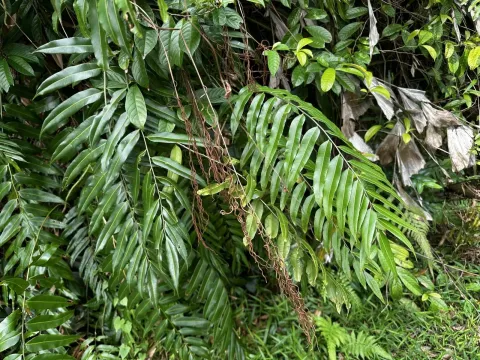
Stenochlaena
Stenochlaena
Stenochlaena is a genus of ferns belonging to the Blechnaceae family. These plants are characterized by their climbing growth habit, with Stenochlaena palustris being the most notable species used as a vegetable in various tropical regions of the world.
What the section contains


Stenochlaena
The plant originates from tropical environments across Asia, Africa, and Australia. It thrives in humid conditions, typically colonizing swampy areas, riverbanks, and secondary forests where high moisture levels and warm temperatures support its rapid vegetative expansion.
Environmental requirements for cultivation include consistently high ambient temperatures and significant atmospheric humidity. Stenochlaena prefers partial shade but can tolerate brighter conditions if moisture levels are sufficiently managed to prevent heat stress and dehydration of the fronds.
The soil should be nutrient-dense, loamy, and slightly acidic, mirroring the conditions found in tropical forest floors. Good drainage is essential, despite the plant's preference for high water availability, as stagnant water can lead to root degradation in suboptimal conditions.
Agrotechnical management focuses on stimulating the growth of young, succulent fronds. This is achieved through proper fertilization, primarily nitrogen-rich applications, which encourage the production of the biomass that constitutes the primary harvestable product.
The agricultural value of Stenochlaena lies in its edible young shoots. These are widely consumed in Southeast Asian cuisine, prepared as stir-fries or salads. They are highly valued for their delicate flavor and fibrous texture, providing a consistent source of vitamins and minerals.
Harvesting is performed by hand-picking the tender tips of the fern. Frequent harvesting of these tips induces the plant to produce more lateral shoots, thereby increasing the overall yield per plant throughout the growing season in well-managed agricultural settings.
Pathogenic threats include leaf-spotting fungi that proliferate in the high-humidity, low-airflow conditions of dense fern beds. These diseases can negatively impact the yield quality and the commercial viability of the crop if not managed through proper spacing and sanitation.
Insect pests such as mites and aphids present significant challenges to Stenochlaena cultivation, as they specifically target the tender young growth. Integrated pest management, focusing on biological controls, is preferred to ensure the safety and quality of the vegetable product for human consumption.