
Swamp fern
Telmatoblechnum serrulatum
Description
Growing requirements
Telmatoblechnum serrulatum, commonly known as the swamp fern, is a perennial plant belonging to the Blechnaceae family. It is native to tropical and subtropical regions of the Americas, where it is primarily found in wetlands, swamps, and along riverbanks.
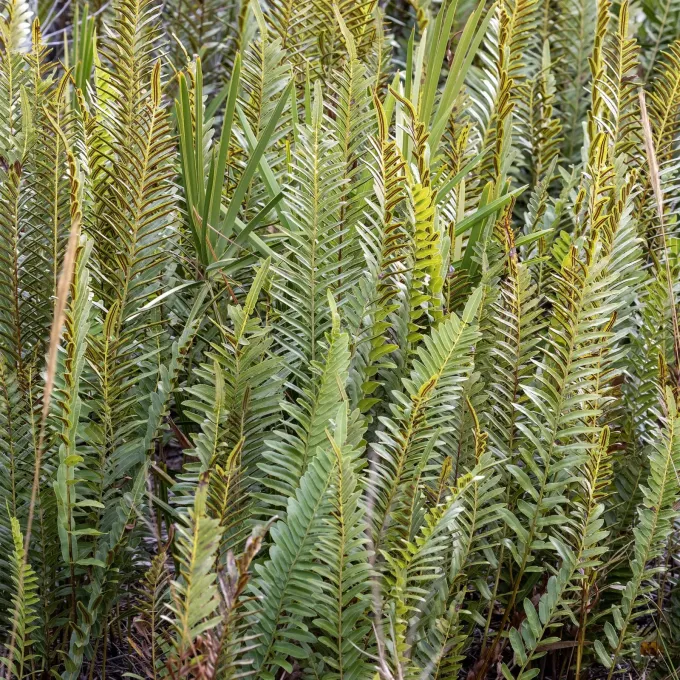
The botanical characteristics of this fern include long, leathery fronds with serrated edges, which gives it its specific epithet. The plant is rhizomatous, allowing it to spread effectively in waterlogged soil conditions where other plants might suffer from root rot.
In terms of soil requirements, this species demands a highly acidic, organic-rich substrate. A mixture consisting primarily of peat moss, pine bark, and sand is recommended to maintain the low pH levels essential for the plant's health and nutrient uptake.
Environmental conditions must mimic the tropical habitat. High humidity levels, ideally above 70%, are crucial for maintaining the lush, vibrant green color of the foliage and preventing the fronds from curling or becoming brittle.
Temperature management should be centered around warmth and consistency. The plant thrives in temperatures between 20°C and 28°C. It is extremely sensitive to cold snaps and must be protected from frost, which can cause total collapse of the plant's vascular structure.
Main diseases and pests
The most common pests affecting this fern are scale insects and spider mites. These pests thrive in indoor environments with poor air circulation and low relative humidity, necessitating regular monitoring of the underside of the fronds.
Fungal pathogens can occasionally strike if the water quality is poor or if the soil drainage is inadequate despite the plant's preference for wet conditions. To mitigate these threats, it is advised to use filtered water and ensure proper spacing to allow for adequate airflow around the plant clusters.