
Woodwardia unigemmata
Woodwardia unigemmata
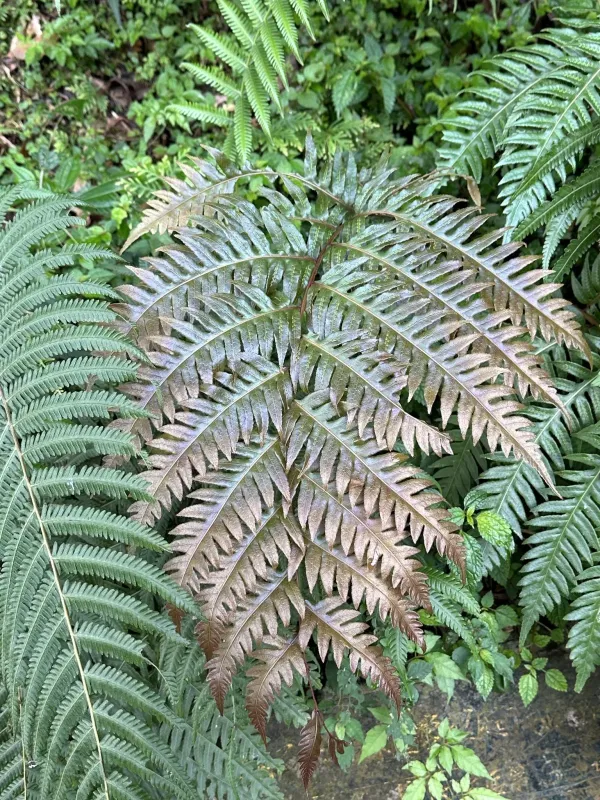
Description
Growing requirements
Woodwardia unigemmata, commonly known as a type of chain fern, belongs to the Blechnaceae family. This species is native to the warm temperate regions of Eastern Asia, specifically mountain forests in China and the Himalayas, where it thrives in shaded and humid environments.
The plant requires a sheltered location with partial to full shade. Direct sunlight is detrimental to its health, as it causes severe leaf scorch and dehydration. A woodland-style setting with protection from wind is considered the ideal environment for its cultivation.
Soil requirements for this fern are quite specific: it needs a rich, moisture-retentive, and well-draining substrate. Incorporating compost, leaf mold, and peat helps simulate its natural forest-floor habitat, providing the necessary acidity and organic matter.
Water management is the cornerstone of Woodwardia unigemmata maintenance. The soil must be kept consistently moist throughout the growing season. In indoor or greenhouse settings, increased humidity is essential to prevent the tips of the fronds from turning brown.
The plant is noted for its beautiful, arching fronds that can reach significant lengths. A defining botanical trait is the development of bulbils on the fronds, which act as vegetative propagation points, allowing the fern to multiply efficiently in favorable conditions.
Main diseases and pests
Fungal issues such as root rot represent the primary threat to this fern. This usually occurs when the plant is kept in waterlogged soil, especially during dormant periods or in winter months when transpiration rates are lower.
Pests such as spider mites are frequent invaders, particularly in environments with dry air. These microscopic pests feed on the underside of the fronds, leading to a mottled appearance. Regular misting helps to deter these infestations effectively.
Scale insects can occasionally affect the stalks of the plant. If detected, these should be removed manually or treated with horticultural oils or approved systemic insecticides, ensuring that the treatment is gentle enough not to harm the fern's sensitive foliage.
Nutrient deficiencies, while rare in rich soil, can occasionally manifest as leaf yellowing. Ensuring the soil pH remains slightly acidic is crucial for the absorption of essential minerals, preventing common chlorosis issues in this species.
Overall, keeping the plant clean and monitoring environmental factors is the best defense. Providing good airflow around the fronds significantly reduces the risk of both fungal pathogens and pest outbreaks, ensuring a robust and healthy specimen.