

Description
Sowing dates
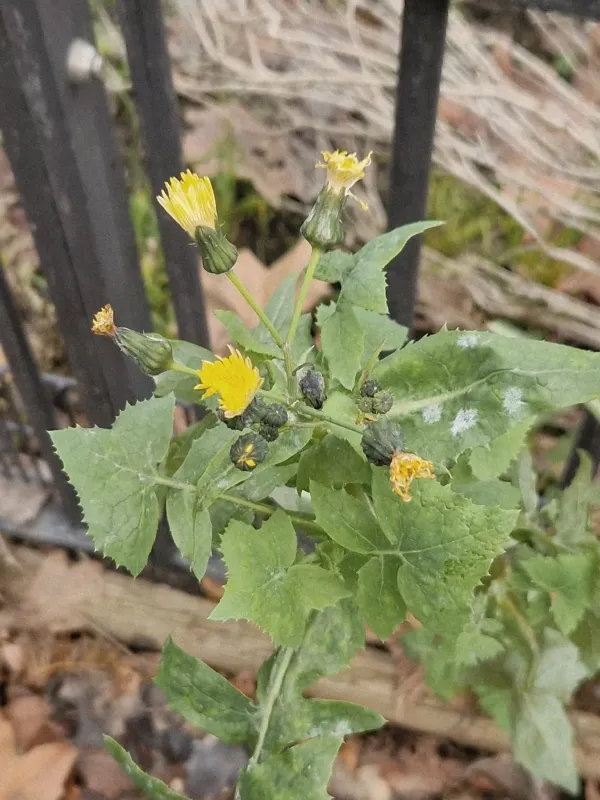
Common sowthistle (Sonchus oleraceus) is an annual herbaceous plant belonging to the Asteraceae family. While primarily regarded as a weed in modern agriculture, it is a highly evolved species with significant biological capabilities and a rapid growth cycle.
The germination period begins when soil temperatures reach +2 to +6 degrees Celsius. Mass emergence usually occurs in the spring, once the soil has warmed to approximately +15 to +20 degrees, aligning with the peak planting season for many essential food crops.
The plant demonstrates high reproductive efficiency, with a single specimen capable of producing over 30,000 seeds per season. These seeds can remain viable in the soil seed bank for several years, which poses a persistent challenge for long-term field management strategies.
Sowthistle is characterized by rapid vegetative growth during its juvenile stage, allowing it to compete aggressively with crops for sunlight, water, and soil nutrients. Timely intervention is essential to prevent the plant from establishing dominance in fields.
Agricultural control methods rely on a combination of mechanical techniques, such as deep autumn plowing to bury seeds, and the application of systemic herbicides. Success in suppressing this weed depends on targeting the plant during its most vulnerable growth phases.
Growing requirements
Common sowthistle exhibits remarkable ecological adaptability, thriving in a wide range of soil types, from heavy clays to light sandy loams. It particularly prefers nutrient-rich, nitrogen-abundant soils, which makes it a common inhabitant of fertilized farmland.
While the plant shows moderate drought tolerance due to its deep taproot, it thrives best in environments with consistent moisture. Excessive moisture, however, can encourage fungal growth, though the plant typically maintains resilience across various hydration levels.
The plant is highly photophilic and achieves optimal development in full sunlight. Areas with high solar radiation support the development of robust stems and heavy biomass, whereas shading significantly inhibits the plant's growth and reproductive capacity.
Temperature requirements for vegetative growth are generally between +18 and +25 degrees Celsius. Although it can endure minor thermal fluctuations, consistent warmth is necessary to accelerate its life cycle and maximize the density of the infestation.
Maintaining soil health and fertility is key to understanding its distribution. Its presence is often an indicator of high soil nitrogen levels and compacted topsoil layers, providing agronomists with clues regarding the chemical state of the agricultural land.
Main diseases and pests
Despite its robustness, the common sowthistle is susceptible to various pathogens, with powdery mildew being the most prevalent. This fungal infection covers the foliage with white mycelium, inhibiting photosynthesis and reducing the overall vitality of the plant.
Insects, particularly aphids, frequently target sowthistle by feeding on the sap of young shoots. This activity leads to curled, deformed leaves and acts as a vector for various viral infections that can weaken the plant’s structural integrity over time.
White rust and various leaf spot diseases are also notable threats, particularly in humid climates. These infections manifest as yellow or necrotic lesions on leaves, which may lead to partial or total senescence of the foliage during the middle of the growth season.
Certain coleopteran and lepidopteran species consume sowthistle flowers and stems, naturally limiting the plant's ability to produce viable seeds. This natural predation plays a role in regulating the density of sowthistle populations in semi-natural field margins.
Managing these threats in a commercial setting often requires integrated pest management (IPM) strategies. This includes using biological control agents and carefully timed chemical interventions to ensure that crop productivity is not compromised by the surrounding weed pressure.
Content graph
Connections · Common sowthistle
Most often together:
Marketplace
Products · 41

Dublon Gold
ЗАТ Фірма Август, Росія.,селище Вурнари,
Herbicides
2
2
·
5.4K
6 offers
117.01 €per 1 l
Buy

Alfa-Prometrin
Zhejiang Zhongshan Chemical Industry Group Co., Ltd.
Herbicides
1
1
·
3K
21 offer
0.48 €per 1 l
Buy


Galera 334 SL
Доу АгроСайенсіс С.А.С., Друзенхайм, Франція
Herbicides
0
0
·
2.6K
5 offers
14.35 €per 1 l
Buy

Biceps Guarant
ЗАТ Фірма Август, Росія.,селище Вурнари,
Herbicides
0
0
·
2.4K
7 offers
0.65 €per 1 l
Buy


Miladar
«Нанджин Ессенс Файн-Кемікал Ко. Лтд» (Китай)
Herbicides
0
0
·
1.3K
22 offers
5.18 €per 1 l
Buy


Ballerina, s.e., (2-ethylhexyl ester of 2,4-dichlorophenoxyacetic acid)
ЗАТ Фірма Август, Росія.,селище Вурнари,
Herbicides
0
0
·
55
2 offers
2.15 €per 1 l
Buy

Slash, EC
Доу АгроСайенсіс С.А.С., Друзенхайм, Франція
Herbicides
0
0
·
50
4 offers
7.59 €per 1 l
Buy


Stefcloram, RK (cloquarid, 267 g/l + picloram, 67 g/l)
ДДЕ Фарм АГ, Тризен, Ліхтенштейн
Herbicides
0
0
·
31
2 offers
14.81 €per 1 l
Buy

Prometrax, KS (permethrin, 500 g/l)
Adam Aghan Ltd., Israel
Herbicides
0
0
·
29
2 offers
8.3 €per 1 l
Buy


Alpha-Pyracid w.r.k.
Ф.Меатон Лімітед, Лондон, Великобританія.
Herbicides
0
0
·
40
No offers
—
Details

Greenwich w.r.k., (bentazon 480 g/l)
Чайна Кемікал Індасттріал і Рісеч Ко .,Лтд.,Гонконг,Китай
Herbicides
0
0
·
37
No offers
—
Details

Hacker, RG (cloquaralid, 750 g/kg)
ZAT «August-Bel», Republic of Belarus
Herbicides
0
0
·
30
No offers
—
Details
