


Reference · Crops
Sow thistle
Sonchus
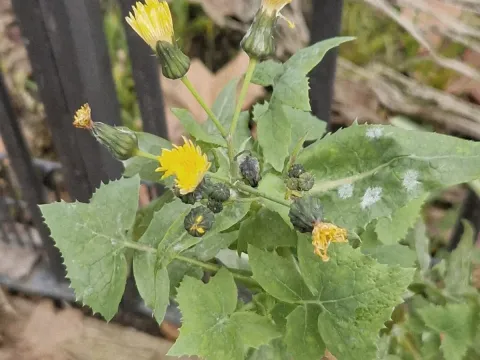
Sow thistle (lat. Sonchus) is a significant genus within the Asteraceae family. It is widely distributed across temperate and tropical regions, thriving in cultivated fields, gardens, and waste areas as a persistent weed that competes for resources.
3
items
What the section contains
Marketplace
Products in this section · 12


Alfa-Prometrin
Zhejiang Zhongshan Chemical Industry Group Co., Ltd.
Herbicides
1
1
20 offers
4.92 €per pack
Buy





Sow thistle
The plant demonstrates high adaptability to various soil types, particularly favoring nutrient-rich loams with adequate moisture. It is highly competitive in arable lands, effectively exploiting available sunlight and nutrients to the detriment of primary crops.
Botanically, Sonchus is characterized by its deep taproot system and rosettes of basal leaves. The stems exude a milky latex when damaged, which is a key identifying trait of the genus. Its ability to produce massive amounts of wind-dispersed seeds makes it a prolific colonizer.
Climate requirements for sow thistle are quite flexible; however, it prefers cool to moderate temperatures for peak germination. The species can survive in both sunny and partially shaded environments, making it a versatile and resilient competitor in diverse agricultural systems.
Effective agronomic management requires a multi-faceted approach. Because of its deep root structure, frequent shallow cultivation is often insufficient. Integrating systemic herbicides with competitive crop rotation remains the standard practice for long-term population reduction.
Sow thistle acts as a host for various pests, most notably aphid species that act as vectors for viruses. These pests can migrate from the weed to cash crops, leading to significant yield losses if left uncontrolled.
Fungal diseases such as powdery mildew and various leaf rusts are commonly observed on the foliage of Sonchus. While these pathogens may cause necrotic spots, they rarely affect the overall vigor of the weed enough to constitute a biological control method.