


Prices in stores
from15.39 €per 1 l
pack from 4.07 € per 10 ml
12 offers from 11 stores
Last Treatment Interval, Days
1
By type of action
Systemic herbicide
By application method
Foliar herbicide
By Mode of Action
Selective herbicide
Your mark
0 votes
0% positive ratings
Store offers · 12 from 11 stores
12 offers in 11 stores — from 15.39 € per 1 l.
Available at: AGRAR · Agromaks2020 · depozituldeseminte-ro · Dezea · Fermerenko · Gazon-trava · Grano · Kurkul · Pomidorka · prohopo-cz · Agrosemena
Prices are collected automatically from store websites and converted at the current exchange rate. Check the price and availability on the store website before ordering.
About product
Systemic control of weeds with total destruction of the root system.
Description
Technology of systemic control for perennial weeds
The core efficacy of "Lontrel A 300" by August lies in its active ingredient, clopyralid, at a concentration of 300 g/l. As a systemic herbicide, it fundamentally changes the approach to combating stubborn perennials like Canada thistle and field thistle. Unlike contact pesticides, clopyralid mimics the action of auxins — natural plant growth hormones — inducing a "hormonal explosion" in weeds and effectively halting all developmental processes.
Mechanism of action and product architecture
The preparation enters the plant through the leaf surface and is rapidly distributed throughout the vascular system, reaching growth points and the root system. This is crucial when targeting species with deep root structures: the active component blocks cell division, leading to leaf curling and the death of meristematic tissues within hours of application.
- Selectivity: This selective herbicide allows for safe application on oats, barley, rapeseed, flax, and cabbage. The product does not suppress crops, targeting only identified weeds.
- Systemic properties: Deep penetration into the root system ensures the destruction of both the above-ground biomass and underground reproductive organs.
- Application flexibility: As a post-emergence herbicide, "Lontrel A 300" allows agronomists to assess actual field weed infestation levels before deciding on treatment.
Application guidelines
The aqueous solution form blends easily into tank mixes without forming sediment. A pre-harvest interval of just 1 day makes this product a highly efficient tool even for intensive agricultural operations. The application rate of up to 0.5 l/ha is optimal for controlling problematic weeds such as common ragweed, field bindweed, and various knotweed species. With a hazard class 3 rating, it requires standard safety measures, making it an economically justified, high-performance solution for crop protection.
Composition
Active ingredients
- Clopyralid гербицид
Application
Used on crops
Specifications
| Last Treatment Interval, Days | 1 |
|---|---|
| By type of action | |
| By application method | |
| By Mode of Action | |
| By Application Timing | |
| Form of the preparation | |
| Application rate | Up to 0.5 L/ha |
| Danger Class | 3 |
| Catalog | Catalog → Herbicides, Desiccants |
| Manufacturer | August |
| Country | Russia |
No reviews yet. Be the first to share your experience.
Alternatives
Herbicides, Desiccants · similar preparations
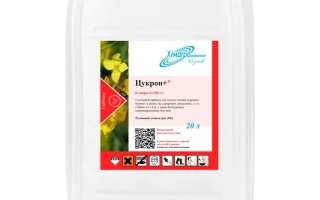

CUKRON + V.R., (CLOPIRACLID, 300 G/L)
Sunrise Agrochemical Co., Ltd.
044 8 offers
17.95 €per 1 l ≈ 908 ₴

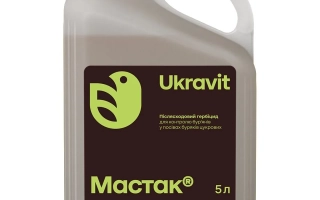
MASTAC, V.R., (CLOPIRACID, 300 G/L)
Nanjing Essence Fine-Chemical Co.
062 5 offers
17.68 €per 1 l ≈ 894 ₴




See also
Often considered together with this product




Recently viewed
Products you’ve viewed on this site
Reviews