
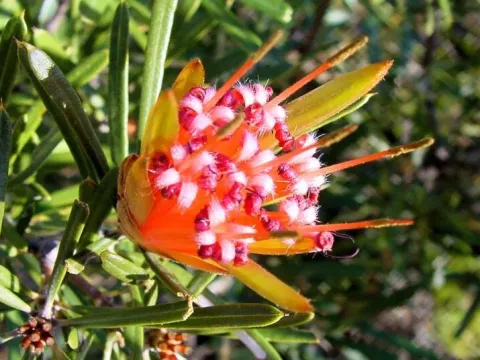
Lambertia
Lambertia
Lambertia is a genus of evergreen shrubs and small trees belonging to the Proteaceae family. Native to Australia, these plants are highly specialized to thrive in specific environmental conditions, often found in heathlands and open forest areas.
What the section contains


Lambertia
The primary requirement for successful cultivation is excellent drainage. Lambertia species are extremely sensitive to "wet feet," meaning that water must flow through the root zone rapidly to prevent root rot and physiological stress.
Regarding soil, these plants prefer acidic to neutral conditions with low phosphorus levels. They are calcifuges, which means they do not tolerate alkaline soils containing high levels of calcium, as this hinders nutrient uptake through their proteoid roots.
Climate adaptability varies, but most species require full sun exposure to flourish. They are generally not frost-tolerant, so in colder regions, cultivation must be limited to greenhouses or protected glasshouse structures.
Watering practices should be consistent but moderate. During the establishment phase, young plants require careful monitoring to ensure the root ball does not dry out completely, yet never remains waterlogged.
The most significant threat to Lambertia is root rot caused by Phytophthora species. Once a plant is infected, recovery is rare, making prevention through soil sterilization and proper irrigation control the only effective strategy.
Insect pests, such as scale insects and mealybugs, can infest the foliage, particularly in poorly ventilated greenhouse environments. These pests sap the plant's energy and leave behind honeydew, which promotes sooty mold.
Fungal infections of the foliage can occur if air circulation is insufficient. Maintaining a clean growing area and removing fallen debris around the base of the plant helps minimize the spread of spores.
Nutrient deficiency, specifically related to trace elements like iron, can manifest as yellowing of the leaves. This is often an indicator that the soil pH is not optimal or that the plant is unable to absorb minerals.
Proper pruning is essential to mitigate pest and disease risks. By removing dead or crowded branches, gardeners improve airflow through the canopy, significantly reducing the likelihood of fungal outbreaks in the dense foliage.