
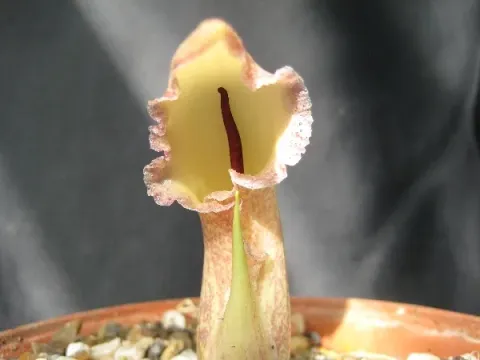
Biarum
Biarum
Biarum is a genus of perennial herbaceous tuberous plants belonging to the Araceae family. In the wild, representatives of this genus are most often found in the Mediterranean region, the Middle East, and Southwest Asia.
What the section contains
 Biarum
 hybrids
Biarum
Biarum hybrids
 Biarum angustatum
Biarum angustatum
Biarum angustatum
 Biarum auraniticum
Biarum auraniticum
Biarum auraniticum
 Biarum bovei
Biarum bovei
Biarum bovei
 Biarum carratracense
Biarum carratracense
Biarum carratracense
 Biarum davisii
Biarum davisii
Biarum davisii
 Biarum dispar
Biarum dispar
Biarum dispar
 Biarum eximium
Biarum mendax
Biarum mendax
Biarum eximium
Biarum eximium
Biarum mendax
Biarum mendax
 Biarum olivieri
Biarum olivieri
Biarum olivieri
 Biarum pyrami
Biarum pyrami
Biarum pyrami
 Biarum rhopalospadix
Biarum tenuifolium
Biarum tenuifolium
Biarum rhopalospadix
Biarum rhopalospadix
Biarum tenuifolium
Biarum tenuifolium
Biarum
These plants are adapted to a specific climate characterized by hot, dry summers and wet winters. In agricultural or decorative practice, their cultivation requires creating conditions as close as possible to their natural habitats, which often limits their outdoor cultivation in temperate latitudes.
The key requirement for Biarum soil is excellent drainage. The plant reacts extremely negatively to water stagnation, which causes rapid rotting of the tubers. Light, stony, or sandy substrates with the addition of leaf mold and a neutral or slightly alkaline pH are preferred.
During the active growth period, which for many species falls in the autumn-winter season, the crop needs moderate lighting and stable temperatures. In the summer, when the plant is in a state of dormancy, the soil must remain almost dry, which protects the underground parts from biological decay.
Botanically, Biarum is notable for its unusual spadix inflorescence, which emerges from the ground before the leaves develop. Its striking appearance makes it a subject of collection, while its use in agriculture is primarily limited to selective or experimental interest in rare geophytes.
The main biological threat to Biarum is fungal infection caused by improper watering regimes. Root rots (such as Pythium or Fusarium) can destroy the tuber in a matter of days if moisture is excessive during the summer dormancy period.
In greenhouse conditions, the plant can be damaged by spider mites, which reproduce actively in low humidity environments. To combat this pest, it is recommended to use preventative acaricide treatments and maintain an optimal microclimate.
Mealybug infestations are also possible, typically localizing at the base of leaf petioles. Regular inspection of the plantings allows for the early detection of infestation sites and their localization using specialized systemic insecticides.
Bacterial infections of the soft tuber tissues occur when the skin's integrity is damaged during transplanting. It is important to disinfect cuts or damaged areas with crushed charcoal to prevent the entry of pathogenic organisms.
For successful cultivation, it is necessary to maintain strict quarantine procedures when introducing new specimens into a collection, as hidden pests or fungal spores can quickly spread to other species of the Araceae family.