
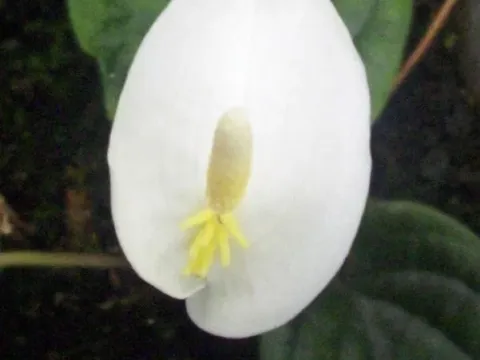
Callopsis
Callopsis
Callopsis (Callopsis volkensii) is a monotypic genus of perennial plants belonging to the Araceae family. Native to the tropical rain forests of East Africa, specifically Tanzania and Kenya, it is considered a specialized species with very specific ecological requirements.
What the section contains

Callopsis
The plant features a creeping rhizome and heart-shaped leaves, exhibiting the characteristic morphology of many tropical understory plants. Its biological structure is adapted to a humid and stable environment where moisture is rarely lacking.
Climatic requirements for successful growth include high ambient temperatures, ideally maintained between 22 and 28 degrees Celsius throughout the year. The plant is intolerant to frost and cold drafts, which cause immediate physiological stress.
Soil requirements involve a loose, well-draining substrate rich in organic matter. An acidic to neutral pH is preferred to ensure proper nutrient uptake. Due to its sensitivity, growers must prioritize a substrate that retains moisture without becoming waterlogged.
Cultivation practices are largely confined to controlled greenhouse settings. This involves providing diffused sunlight, high humidity levels, and careful monitoring of irrigation to prevent root rot, which is the most significant hurdle in its management.
The primary threats to Callopsis include soil-borne pathogens and root rot, often triggered by poor drainage or overwatering. These conditions quickly compromise the health of the rhizome system.
Pest pressures are typical of indoor tropical collections, with spider mites and mealybugs being the most persistent threats. These insects feed on the sap and can lead to secondary infections in the leaf tissues.
Integrated pest management should focus on early detection. Regularly inspecting the underside of the leaves is essential to prevent infestations from reaching levels that require aggressive chemical intervention.
Good air circulation is a critical prophylactic measure. By keeping the canopy well-ventilated, growers can significantly reduce the risk of fungal outbreaks, which thrive in stagnant, humid environments.
Furthermore, maintaining soil hygiene by removing dead plant debris prevents the accumulation of inoculum for pathogenic fungi, ensuring the long-term viability of the crop in a controlled environment.