
Biarum olivieri
Biarum olivieri
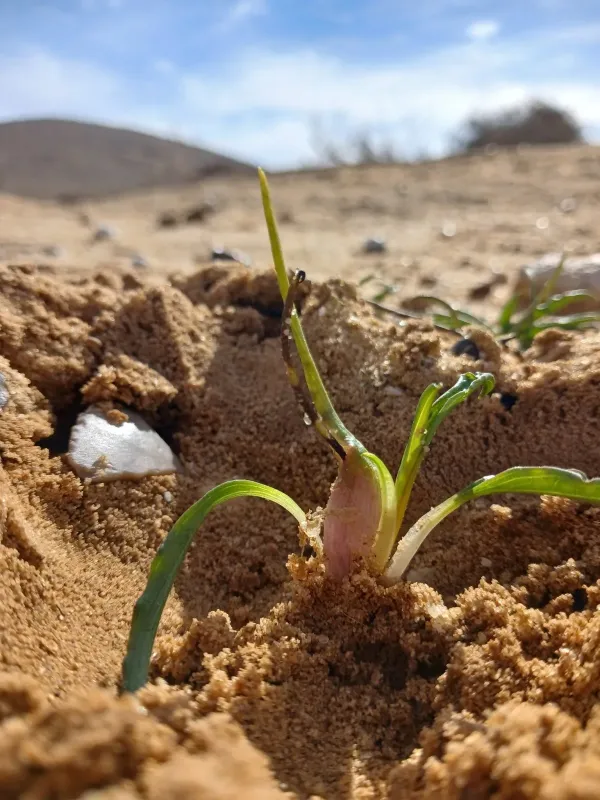
Description
Growing requirements
Biarum olivieri is a perennial tuberous plant belonging to the Araceae family. Naturally occurring in the Eastern Mediterranean, particularly in Greece and Turkey, it thrives in stony and arid environments where many other plants struggle to establish themselves.
The culture requires exceptionally well-draining, lime-rich soil to mimic its native habitat. Providing a proper drainage layer is the single most important factor for success, as moisture retention in the root zone is lethal to the tubers during the dormant phase.
Its lifecycle is strictly dictated by Mediterranean climate patterns. Growth initiates in autumn with the return of rains, while the entire summer season must be spent in complete dormancy under dry soil conditions to prevent the tuber from rotting.
Temperature requirements are centered around subtropical conditions. While it can handle cool winters, it lacks frost resistance, necessitating protection or greenhouse cultivation in colder temperate zones to ensure its long-term survival.
Botanically, the species is recognized by its unique inflorescence, featuring a spadix protected by a dark-colored spathe. The plant has evolved to attract specific pollinators, such as flies, by emitting a distinct, often pungent aroma during flowering.
Main diseases and pests
Fungal infections, particularly root rot, represent the primary threat to this species. These are almost exclusively caused by excessive moisture levels during the critical dormant period in summer.
Pests such as spider mites and thrips can cause damage to the foliage, particularly in greenhouse settings where air circulation is restricted and humidity fluctuates significantly.
Bacterial soft rot, often triggered by Erwinia species, can rapidly destroy the tuber if temperatures remain too high while the substrate is kept too wet, leading to irreversible plant collapse.
Rodents may cause mechanical damage to the tubers, which poses a risk to stored inventory or plants grown in open fields where natural predators are absent.
Effective management against threats involves strict control of the irrigation cycle, use of sterilized substrate, and maintaining optimal ventilation to ensure the health of the tuberous roots.