
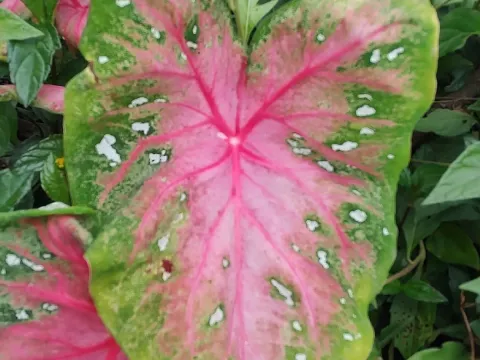
Caladium
Caladium Vent.
Caladium is an ornamental crop belonging to the Araceae family, highly valued for its striking, heart-shaped leaves with vibrant patterns. Native to the tropical rainforests of South and Central America, this plant is now widely cultivated across the globe as a popular decorative species.
What the section contains


Caladium
The plant requires a warm, humid environment to thrive, with temperatures ideally ranging between 22°C and 28°C. Being a tuberous plant, it enters a dormant phase when temperatures drop, during which the foliage dies back and the tuber needs to be kept in a dry, warm place.
Successful cultivation depends heavily on soil quality; the substrate must be highly porous, well-draining, and rich in organic matter. A mixture of peat, perlite, and decomposed compost is generally considered the optimal growing medium for healthy tuber development.
Watering management is crucial for this culture, as the tubers are susceptible to rotting if kept in waterlogged soil. It is essential to maintain consistent moisture without saturation, ensuring that the container or planting site has effective drainage holes.
In terms of light, caladium prefers bright, indirect sunlight to develop its characteristic coloration. Direct exposure to intense mid-day sun can scorch the delicate foliage, while insufficient light may result in leggy plants and faded leaf colors.
The most common pests affecting caladium crops include aphids, mealybugs, and spider mites. These insects typically cluster on the underside of the leaves, causing wilting, yellowing, and eventual loss of the plant's decorative appeal.
Fungal pathogens such as Pythium and Rhizoctonia pose significant risks, especially in poorly ventilated environments with high humidity. These diseases primarily target the tubers, causing them to turn soft, brown, and eventually decay entirely.
Effective pest management involves integrated control strategies, including the use of horticultural soaps or specific systemic insecticides. It is critical to monitor new plant introductions to ensure they are free from infestations before placing them near healthy stock.
Cultural practices such as removing dead foliage and maintaining clean soil surfaces help reduce the risk of disease spread. Proper spacing between plants improves air circulation, which significantly decreases the likelihood of fungal outbreaks.
- Regular inspection of the root zone for signs of decay.
- Application of preventative fungicides during the planting stage.
- Isolation of any plants showing signs of infestation or sickness.