
Asian skunk cabbage
Lysichiton camtschatcensis
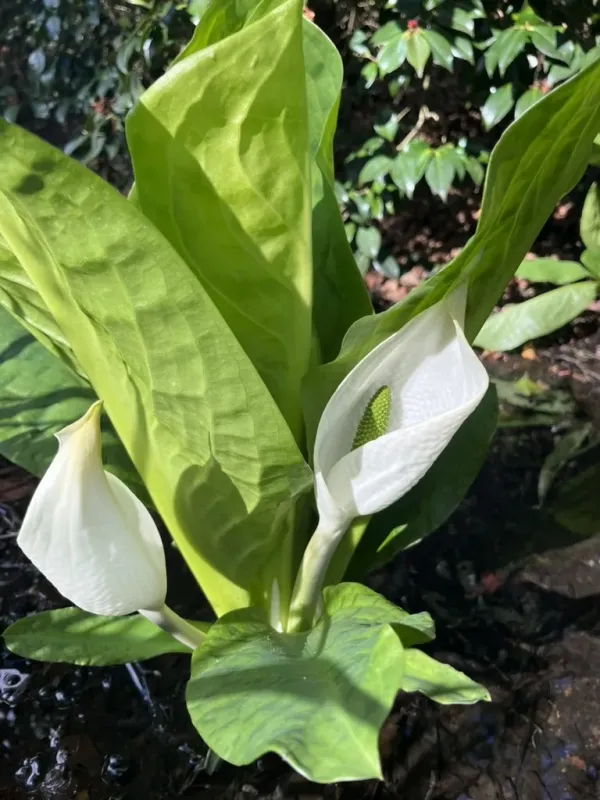
Description
Growing requirements
Asian skunk cabbage (Lysichiton camtschatcensis) is a perennial herbaceous plant belonging to the Araceae family. It is native to the wetlands and riverbanks of the Russian Far East, Japan, and parts of North America.
This species thrives in marshy, waterlogged conditions. It is frequently utilized in landscape design as a primary plant for margins of ponds, streams, or naturally boggy depressions in the garden.
The plant requires deep, fertile, moisture-retentive soil, ideally enriched with decomposed organic matter. It prefers neutral to slightly acidic pH levels to maintain healthy foliage and vigorous growth.
While tolerant of full sun, the plant performs best in partial shade. Excessive exposure to direct heat can cause leaf scorch if the soil moisture level is not kept consistently high during summer.
The hardiness of this species is remarkable; it remains dormant during winter and emerges early in spring. It does not require specific fertilization if the natural soil is nutrient-rich, but a layer of organic mulch helps retain moisture.
Main diseases and pests
Lysichiton camtschatcensis is generally robust and free from serious agricultural pests. However, poor drainage that leads to stagnant water can occasionally induce root rot, especially in container gardening.
Slugs and snails are the most common pests, frequently attacking the tender emerging leaves and flower spathes in early spring. These mollusks can cause significant aesthetic damage if left unchecked.
Fungal leaf spots may appear during prolonged periods of high humidity and poor ventilation. Keeping the area surrounding the plants clean and removing dead foliage helps to reduce potential pathogen habitats.
Gardeners should prioritize manual control methods for slugs, such as setting barriers or traps, to protect the plant during the critical growth phase early in the season.
Since the plant is often cultivated in or near water, it is advised to avoid synthetic pesticides to protect the broader ecosystem of the wetland environment and any associated aquatic fauna.