
Biarum tenuifolium
Biarum tenuifolium
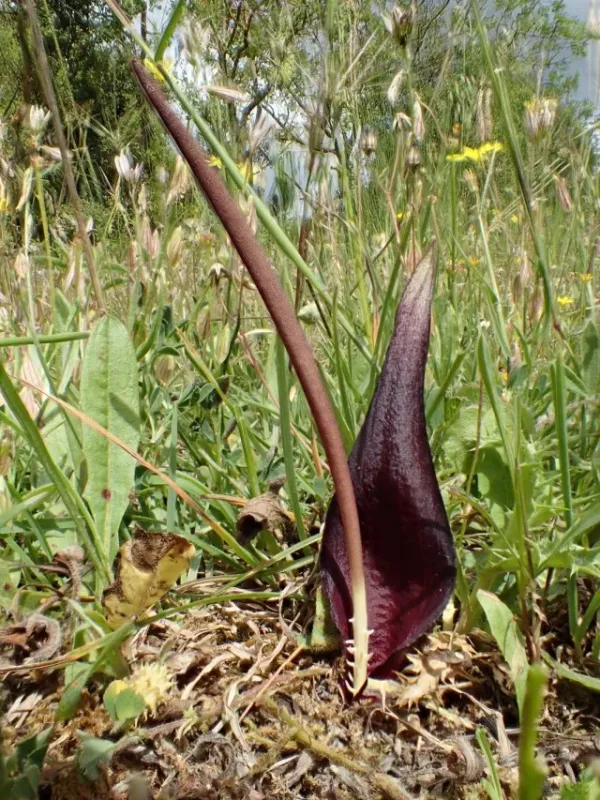
Description
Growing requirements
Biarum tenuifolium is a unique tuberous perennial belonging to the Araceae family. Native to the Mediterranean region, this plant has adapted to survive in arid, rocky environments where drainage is excellent and nutrient availability is specialized.
The botanical structure is defined by its seasonal growth cycle, where the striking, dark-colored inflorescences appear in early autumn, followed by linear, grassy foliage. This distinct phenology allows the plant to avoid the harsh, arid conditions typical of Mediterranean summers.
Cultivation requirements necessitate well-draining, calcareous soils that prevent moisture accumulation around the tuber. For container gardening, a mineral-heavy substrate is recommended to mimic the plant's natural rocky habitat and ensure proper gas exchange for the roots.
Climatic preferences include a requirement for distinct wet and dry seasons. Growers must ensure a dormant period during the summer months when the tubers should be kept dry to prevent decay, while autumn and winter require mild moisture to initiate flowering.
The agricultural and horticultural use of Biarum tenuifolium is primarily decorative, catering to collectors of rare geophytes. Its exotic form and unusual blooming schedule make it a prized specimen for specialized botanical gardens and rockery enthusiasts.
Main diseases and pests
The primary threats to this species are fungal pathogens, specifically those causing tuber rot triggered by improper watering schedules or high soil humidity during the dormancy phase.
Pests are generally less problematic than environmental stressors; however, sap-sucking insects like mealybugs and spider mites can infest the foliage if kept in poorly ventilated indoor or greenhouse conditions.