
Caladium
Caladium
Caladium is a genus of tuberous plants within the Araceae family, native to tropical regions of South and Central America, specifically the Amazon basin.
What the section contains


Caladium
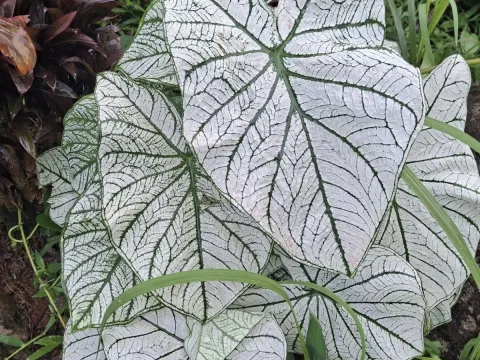
The plant is distinguished by its large, dramatic heart-shaped leaves which come in a variety of vibrant patterns, colors, and translucent textures.
In terms of agricultural climate requirements, Caladium thrives in warm and humid conditions, preferring temperatures consistently above 20 degrees Celsius.
Cultivation requires a nutrient-rich, loose, and well-draining soil medium, ideally maintaining a slightly acidic pH to support rapid tuber development.
Commercially, Caladiums are primarily used as ornamental plants for interior landscaping, commercial floral displays, and humid conservatory environments.
Fungal diseases, particularly root and tuber rot, represent the primary threat to the crop, typically triggered by excessive moisture and poor drainage.
Common pests include spider mites and mealybugs, which are particularly prevalent in environments with insufficient atmospheric humidity levels.
Effective management involves consistent monitoring of the leaf undersides and implementing strict sanitation practices for any potting medium used.
Should infestation occur, prompt application of horticultural oils or systemic insecticides is recommended to prevent damage to the delicate foliage.
Maintaining optimal spacing between plants ensures adequate air circulation, which serves as a natural deterrent against fungal pathogen outbreaks.
The growth cycle is cyclical, with the plant entering a mandatory dormancy phase triggered by shorter photoperiods and cooling temperatures.
During the senescence period, the foliage naturally wilts, directing all essential nutrients back into the underground tuber for winter survival.
Harvesting the tubers involves carefully lifting them from the growing medium once the entire vegetative mass has turned brown and withered.
After harvesting, the tubers must be thoroughly cleaned, cured in a dry environment, and stored in dry peat moss or vermiculite.
Proper storage conditions require a stable temperature of approximately 13 to 15 degrees Celsius to maintain tuber viability until the next season.