
Biarum bovei
Biarum bovei
Description
Growing requirements
Biarum bovei is a distinctive tuberous perennial belonging to the family Araceae. Native to the rocky habitats of the Eastern Mediterranean, this plant has adapted to survive in challenging environments with marked seasonal shifts.
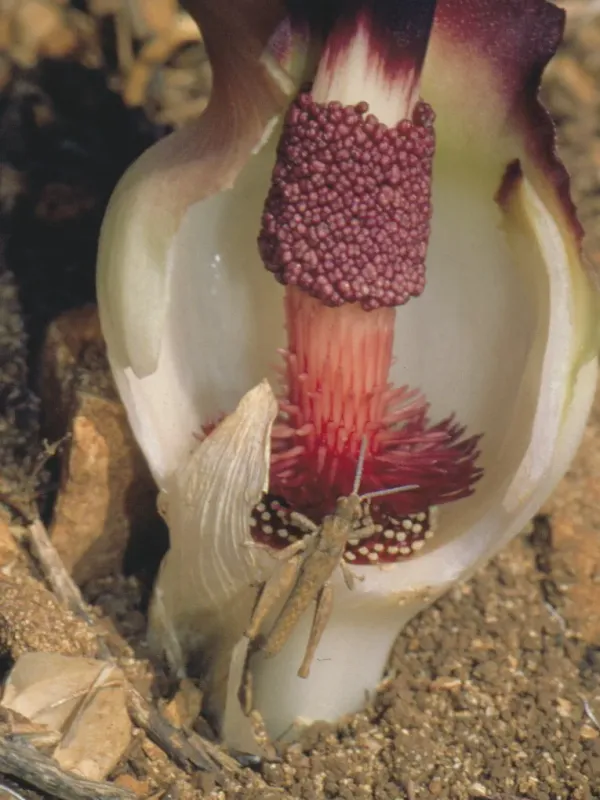
Botanically, the plant is known for its seasonal dimorphism. It produces its inflorescence—a spadix wrapped in a dark spathe—in the autumn, often before the foliage emerges. The leaves are typically linear to lanceolate, appearing during the cooler winter months.
Cultivation requirements demand excellent drainage, as the tubers are highly susceptible to rot during their summer dormancy. A gritty, lime-rich substrate is ideal for replicating the natural conditions of their native limestone-based habitats.
Climate preferences for this species involve a cycle of dry, warm summers and mild, moist winters. In non-native climates, it is essential to keep the tubers dry throughout the summer heat to prevent fungal decay and to encourage a successful bloom in the following season.
Economically and practically, Biarum bovei is valued solely as an ornamental or botanical curiosity. It is not an agricultural crop in the traditional sense, as its foliage and tubers contain calcium oxalate, making them unsuitable for consumption by livestock or humans.
Main diseases and pests
The most significant threats to the survival of the plant in cultivation are pathogenic fungi and oomycetes. These typically manifest as basal or tuber rot, which can destroy the specimen quickly if soil drainage is compromised.
Pests that may impact the plant include common greenhouse nuisances like spider mites or scale insects. Careful monitoring and maintaining proper air circulation around the foliage can significantly reduce the risk of infestations.