
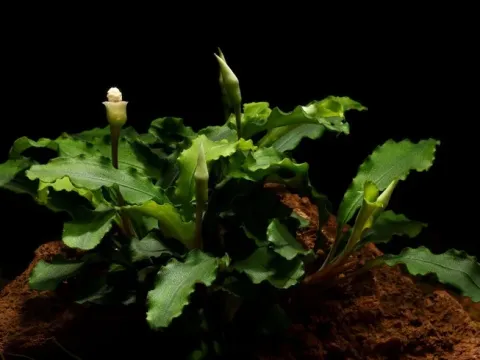
Bucephalandra
Bucephalandra
Bucephalandra is a genus of flowering plants in the family Araceae, naturally occurring as rheophytes. These plants are native to the island of Borneo, where they thrive on riverbanks and rocks submerged in fast-flowing tropical streams, perfectly adapted to withstand current.
What the section contains


Bucephalandra
To cultivate these plants successfully, aquarists must provide specific environmental conditions. A stable water temperature between 22°C and 26°C is considered ideal, while maintaining consistent water hardness and pH levels is crucial to prevent the plant from shedding its foliage due to osmotic stress.
Lighting requirements for Bucephalandra are moderate; excessive light can be detrimental as it encourages algae growth on the leaves, which hinders the plant's ability to photosynthesize effectively. A photoperiod of about 8 to 10 hours is usually sufficient for optimal physiological development.
Cultivation practices involve attaching the plant to hard surfaces such as driftwood, lava rocks, or stone, rather than planting it in a soil substrate. The rhizome must remain exposed to moving water to prevent suffocation and subsequent rot, which is a common failure point for beginners.
Regular fertilization with microelements and supplementation of CO2 are highly recommended to promote robust growth and vibrant coloration. By mimicking the nutrient-rich, moving water of their native habitats, growers can ensure the longevity and decorative value of these unique tropical plants.
The most significant physiological threat is 'melting', a process where leaves turn translucent and degrade rapidly. This is almost always triggered by a sudden change in environment, such as moving the plant to a new tank or adjusting water parameters too aggressively.
Algal infestation remains a major concern due to the slow growth rate of the species. Common types such as black brush algae or green spot algae can easily colonize the surface of the leaves, effectively choking the plant and reducing its light absorption capacity.
Rhizome rot is a destructive condition often caused by improper planting techniques, specifically burying the rhizome in dense substrate. When the plant tissue lacks oxygen and proper circulation, bacterial infection sets in, causing the rhizome to turn mushy and dark in color.
In riparian or paludarium setups, the plant may occasionally face pressure from common greenhouse pests like aphids or spider mites. These require a cautious approach, utilizing environmentally friendly soap-based sprays that do not leave harmful residues on the delicate leaf surfaces.
Nutrient deficiency, specifically related to potassium or iron, often leads to chlorosis and necrotic spots on older leaves. Maintaining a precise dosing schedule based on water testing results is the best way to prevent these symptoms and keep the collection in prime health.