

BIOLEP (LEPIDOCID)
ТОВ ВО «СІББІОФАРМ», Російська Федерація
Insecticides
0
0
·
51
1 offer
16 €per 1 l
Buy
Loxostege sticticalis
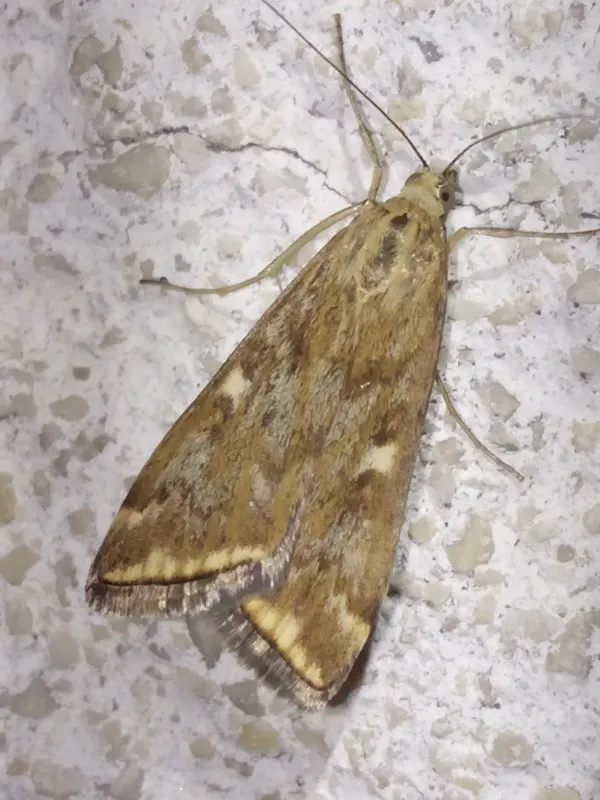
The beet webworm (Loxostege sticticalis) belongs to the order Lepidoptera and the family Crambidae. It is a small moth with a wingspan of approximately 20–26 mm, featuring brownish-grey wings with darker spots.
Larvae, known as caterpillars, can reach up to 35 mm in length. They display a range of colors from pale green to dark grey and possess distinctive longitudinal stripes on their bodies.
The life cycle undergoes four stages: egg, larva, pupa, and adult. The pupae overwinter in tough silk cocoons buried deep within the soil profile to protect against frost.
Moths emerge in spring as temperatures rise. They are nocturnal insects that feed on flower nectar, which provides the energy necessary for reproduction and flight.
High reproductive rates allow populations to explode rapidly, leading to major outbreaks that can occur sporadically depending on climatic conditions and weather patterns.
This species is highly polyphagous, meaning it feeds on a vast array of botanical hosts, making it one of the most dangerous pests in diverse agricultural landscapes.
Key affected crops include fodder beet, winter rapeseed, cabbage, hemp, sunflower, winter barley, hops, and apple trees.
Young larvae initially feed on the undersides of leaves, creating a skeletonized appearance, while older larvae consume entire leaf blades, leaving only the veins behind.
In cases of severe infestation, caterpillars exhibit migratory behavior, moving in large masses across fields, causing total defoliation of the crop within a short time frame.
Besides foliage, they can damage stems and fruit, which significantly degrades the crop's physiological state and results in substantial economic yield losses.
Cultural control practices, specifically deep plowing of soil in autumn, are highly effective as they destroy the overwintering cocoons and expose larvae to environmental stress.
Weed management is critical, as blooming weeds provide essential nectar sources for adult moths, which can attract populations and encourage egg-laying in nearby fields.
Chemical control is targeted at the early larval stages when caterpillars are most susceptible to insecticide applications, ensuring a high mortality rate before major damage.
Monitoring using pheromone traps is recommended to detect the arrival of the moths, allowing farmers to predict potential population surges and apply timely interventions.
Biological control methods, such as the release of Trichogramma wasps, can effectively parasitize the eggs of the moth, serving as an eco-friendly component of pest management.




No discussions yet — be the first.