


SKU #66329
·
36 views
Sorghum
Sorghum
North Caucasian FARCUser rating
0 votes0% positive reviews
No ratings yet — be the first.
Direction
Hay, Silage
Vegetation Period
100-110 days
Plant; height
180-200cm
Registration year
2004
Prices in stores
from2 €per 1 kg
pack from 0.2 € per 100 g
1 offer from 1 store
Store offers · 1 from 1 stores
Prices are updated on loadLoading offers…
Available at: ОптоМания
Aggregator catalog: prices are collected automatically from store websites, normalized by AI and converted at the current exchange rate. Before ordering, confirm the price and availability on the store's website. This block is not indexed by search engines — the data is loaded after the page opens.
About product

A reliable choice for hay and silage production with high resistance to major pests and diseases.
Direction
Hay, Silage
Vegetation Period
100-110 days
Plant; height
180-200cm
Registration year
2004
Description
Stable forage base with 'Travinka' sorghum
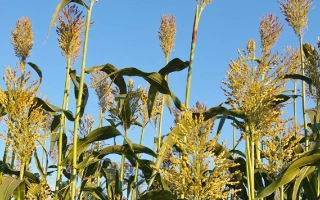
For livestock-focused farms, balancing high biomass yield with crop hardiness is a top priority. 'Travinka', developed by SKFNAC, meets the farmers' need for a reliable source of hay and silage. With a plant height of 180–200 cm, it demonstrates excellent adaptability, which is critical in fluctuating climate conditions.
Agronomic advantages
- Stress resistance: One of the main challenges for an agronomist is protecting crops from pests and diseases. 'Travinka' possesses genetic resistance to the frit fly, meadow moth, aphids, and bacteriosis. This significantly reduces pesticide load and chemical treatment costs.
- Usage flexibility: The variety is intended for hay and silage. Its vegetation period of 100–110 days allows for optimal crop rotation integration and efficient feed harvesting scheduling.
Practical application on the farm
The core strategy when working with this variety is prioritizing a consistent volume of green mass while minimizing crop loss risks. Because 'Travinka' effectively resists major sorghum pests, the stands maintain density right up to harvest time. The stem height (up to 2 meters) ensures excellent productivity per hectare, making this variety an economically sound choice for producing high-quality winter silage.
The variety was developed by a team of experts at the North Caucasian Federal Agricultural Research Center (Polovyanova L.V., Pospelov A.P., Petrov O.I.), confirming a scientific approach to breeding and predictable performance in the field. This is the solution for those who prefer proven genetics over risky hybrids.
Crop & resistance
Crop
Disease resistance
Pest resistance
Specifications hover over for a hint about the specification
|
Direction
Direction
Existing varieties and types of cabbage are grown for fresh consumption, long-term storage, and technical processing. |
|
|---|---|
| Vegetation Period | 100-110 days |
| Plant; height | 180-200cm |
| Registration year | 2004 |
| Catalog | Catalog → Sorghum |
| Manufacturer | North Caucasian FARC |
| Legal data |
Show · 8
|
| Country | Russia |
Not yet комментариев. Be the first!
Alternatives
Sorghum seeds · similar varieties


See also
Often considered together with this variety


Recently viewed
Products you’ve viewed on this site
Reviews · 0