
Beet webworm
Achyra rantalis
Description
How to identify
The beet webworm (Achyra rantalis) is a member of the Crambidae family, known for its significant impact on various agricultural crops.
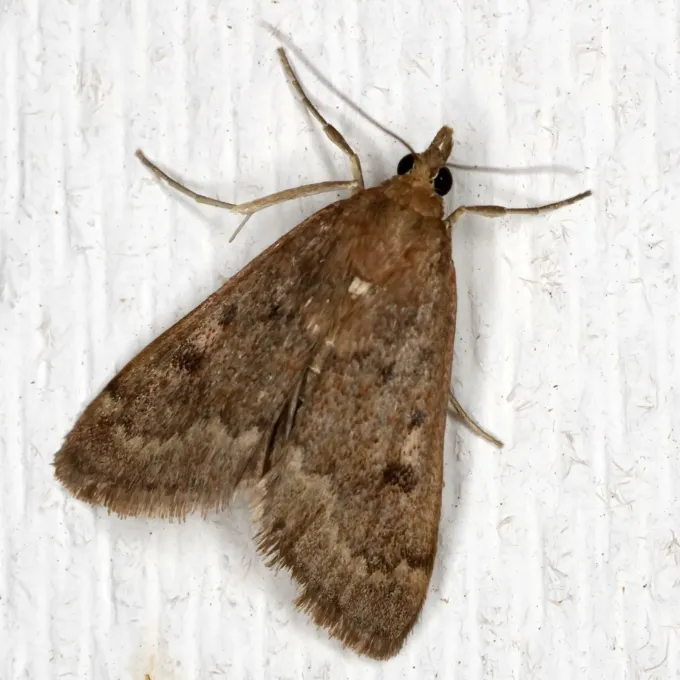
The adult moth has a wingspan of approximately 26 mm, featuring a grayish-brown appearance with distinct dark spots on the forewings.
Larvae develop through several instars, reaching up to 35 mm in length and displaying colors ranging from pale green to dark brown or black.
Pupation occurs within sturdy, silk-lined cocoons that are typically found in the upper soil layers or attached to plant debris.
The species demonstrates high adaptability to varying climatic conditions, allowing for multiple generations per season in warmer regions.
What it damages
This pest is a major polyphagous insect capable of feeding on over 200 plant species, posing a severe threat to commercial agriculture.
Primary target crops include sugar beets, sunflowers, soybeans, corn, and various legumes, where yield losses can be substantial.
Young larvae initially skeletonize leaves by feeding on the lower surface, whereas older larvae consume entire leaf blades, leaving only veins.
In cases of high infestation, the pest can defoliate large tracts of farmland in a very short period, causing massive economic losses.
Heavy feeding pressure during the critical growth stages of the plant prevents proper energy storage and reduces the quality of the final harvest.
When it appears
Adult moths typically emerge in the spring once the ambient temperature remains consistently above 15 degrees Celsius.
The availability of nectar-producing weeds is essential for moth mating and egg development, which drives the pest's reproductive success.
Egg hatching usually takes about one week, depending on temperature and humidity levels in the microenvironment of the crop canopy.
Multiple generations throughout the summer often lead to overlapping stages, making field monitoring and management highly complex.
Before winter, the species enters a dormant pupal state in the soil, effectively surviving freezing temperatures and harsh conditions.
Signs of infestation
The first indication of a beet webworm outbreak is the sudden flight of adult moths from the foliage when walking through the field.
Careful examination of the underside of leaves will reveal rows of flattened, whitish eggs, indicating an imminent population increase.
The presence of fine silk webbing between leaves and damaged plant tissue is a hallmark of larval activity and successful infestation.
Visible clusters of larval frass (droppings) on the ground or within the leaf axils are clear signs of active feeding and development.
Severe defoliation patterns, where only the leaf skeletons remain, signify that the larvae have progressed to later stages of development.
Control measures
Cultural control methods such as deep autumn plowing are essential to destroy the cocoons and reduce the number of overwintering pupae.
Maintaining field borders free of flowering weeds is a vital tactic to eliminate the nectar sources required by the adult moths for reproduction.
Chemical applications are most effective when timed during the early larval instars, as these younger stages are more susceptible to insecticides.
- Application of approved pyrethroid or organophosphate insecticides.
- Use of biological control agents like Bacillus thuringiensis.
- Employment of pheromone traps for early warning and monitoring.
Proactive monitoring and following economic thresholds are critical to determining whether pesticide application is necessary to protect yield profitability.
Taxonomy
- Latin name
- Achyra rantalis
- Order
- Lepidoptera (butterflies)
- Family
- Crambidae
- EPPO code
- LOXORA
Discussion
No discussions yet — be the first.